
How to Find Recently Released Williamson County Inmates
The county handles release status through the same Williamson County Records Inquiry used for the jail roster. The Corrections Bureau page directs the public to search jail records by first and last name or by booking number. A release date or custody status may appear on the record, though exact fields can vary. If the online status is unclear, the next step is a phone call to the jail.
Release can happen in several ways. A person may post bond, have charges dismissed, finish a sentence, or be transferred to state prison under a court order. Because a release can occur at any hour, the online record may lag behind the actual event. When timing matters, verify directly with the Sheriff's Office rather than relying on a single screen.
Release conditions trace back to the magistrate or the assigned court. At the first appearance, the magistrate sets bail and any conditions, so a person can be released once those terms are met. For a sentenced person, the timing shifts to TDCJ and its transport schedule. The county does not post a clean release feed, which is why a mix of the jail inquiry, a phone call, and a VINELink alert gives the fullest picture of a release.
Setting Up Release Notifications
VINELink is the free service that sends custody-status alerts for Texas. You register once, and the system notifies you by phone or email when a person is released, moved, or has a status change. You can search and register through the VINELink Texas person search.
- Open VINELink and choose Texas, then the person search.
- Search by the person's name to find the matching custody record.
- Register for alerts by phone or email so you hear about a release or transfer.
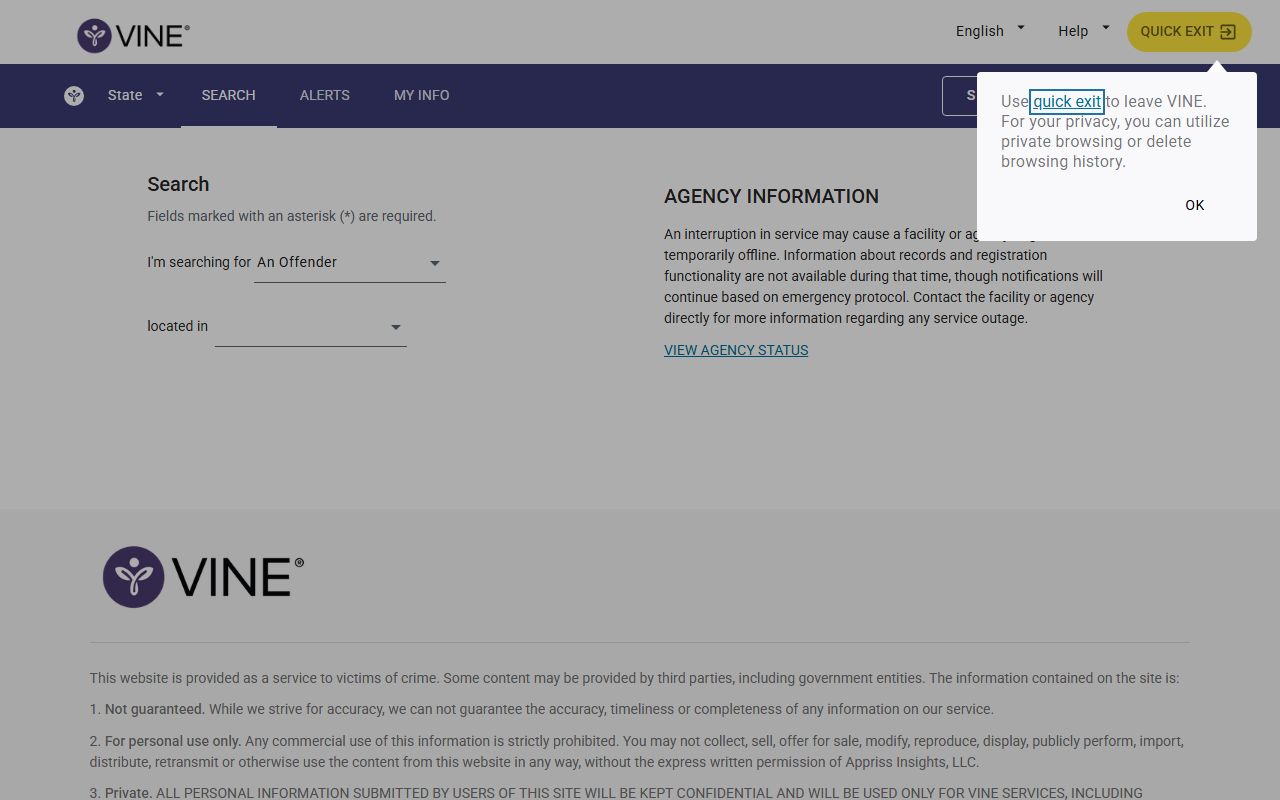
VINELink notifications are useful for victims and families who need to know the moment custody status changes.
Searching Texas Prison (TDCJ) Records
A person sentenced to state prison is held by the Texas Department of Criminal Justice. TDCJ runs an online inmate search by name or TDCJ number, and the results show location, offenses, and a projected release date. That projected date is the closest thing to a release estimate for state prisoners. You can start at the TDCJ inmate information page.
| Field Label | Type | Required | Notes |
|---|---|---|---|
| Name | Text | No | Search by first and last name. |
| TDCJ Number / SID | Text | No | State ID number for an exact match. |
| Search | Button | n/a | Runs the TDCJ online inmate search. |
A TDCJ result lists location, offenses, and projected release date. Requests can also be made online, by email, or by phone through TDCJ. The table below shows the fields a state result returns.
| Field | What It Shows |
|---|---|
| Location | The TDCJ unit or facility holding the person. |
| Offenses | The offenses the person is serving time for. |
| Projected Release Date | The estimated date the person is set to be released. |
| Status | Whether the person is in custody or no longer held by TDCJ. |
Federal Bureau of Prisons Locator
People in federal custody are found through the Bureau of Prisons locator, which covers inmates from 1982 to the present. You can search by number or by name through the BOP inmate locator. The locator returns the register number, age, race, sex, location, and release date.
| Field Label | Type | Required | Notes |
|---|---|---|---|
| Last Name | Text | Yes (name search) | Required for a name search. |
| First Name | Text | Yes (name search) | Required for a name search. |
| BOP Register # | Text | No | Number format #####-###. |
| Race / Age / Sex | Filter | No | Optional filters to narrow a name search. |
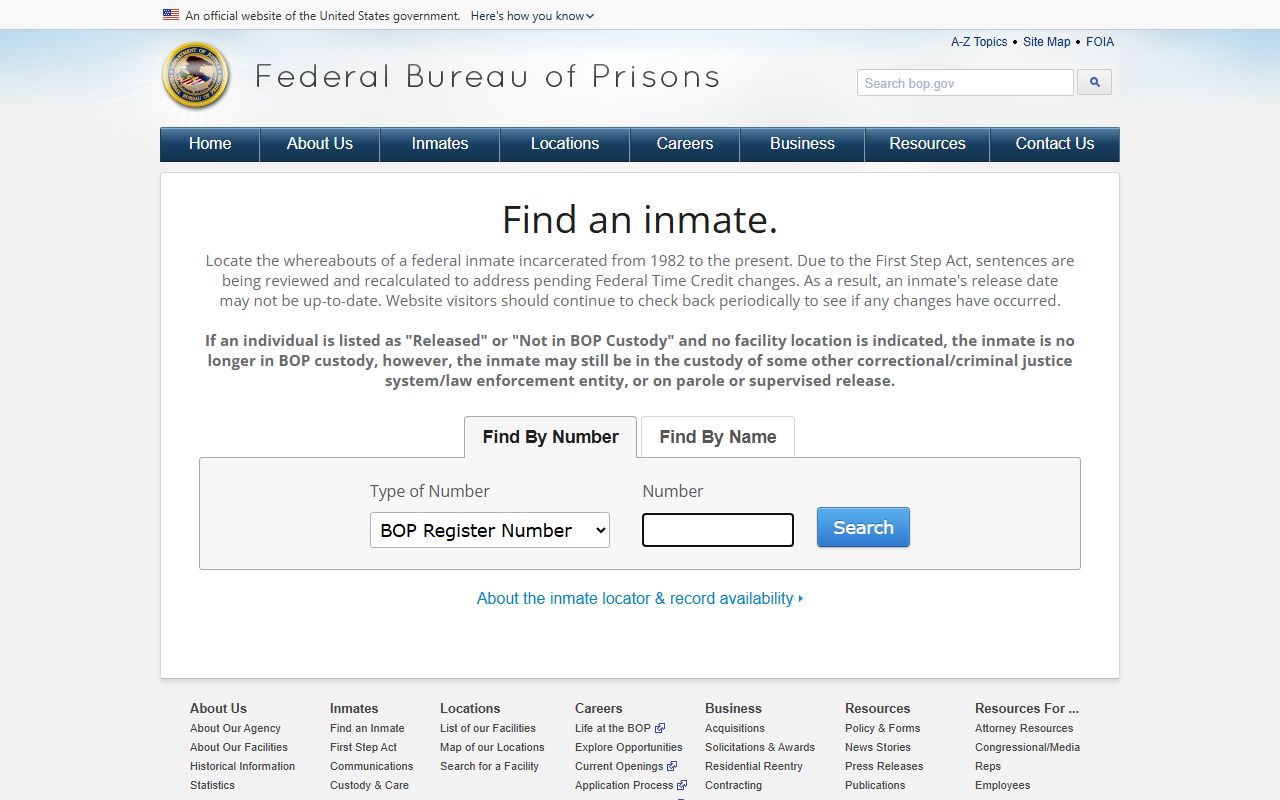
If a result shows released or not in custody with no facility, the person is no longer in federal custody but may be on supervised release or held in another system, such as a state prison or county jail.
Verifying Release in Person or By Phone
Online tools are a start, not a final word. For the county jail, call the Sheriff's Office or use the records inquiry to confirm a custody status. For state prison, contact TDCJ directly when a record is unclear. Property return and exact release timing are not published by the county, so a phone call is the surest way to confirm. Keep names, dates of birth, and booking or TDCJ numbers ready so staff can find the record fast. An in-person check at the jail lobby is another option when a phone line is busy or the online status looks out of date.
Texas Sex Offender Registry
The Texas Department of Public Safety runs the public sex offender registry. You can search by name, address, ZIP code, county or city, and even by a school. The registry is built on the registration program required by state law. You can read about it on the DPS sex offender registration program page.
| Field Label | Type | Required | Notes |
|---|---|---|---|
| Name | Text | No | Search by registrant name. |
| Address / ZIP | Text | No | Search a location or area. |
| County / City | Dropdown | No | Narrow to Williamson County or a city. |
| Higher Education | Text | No | Search near a college or university. |
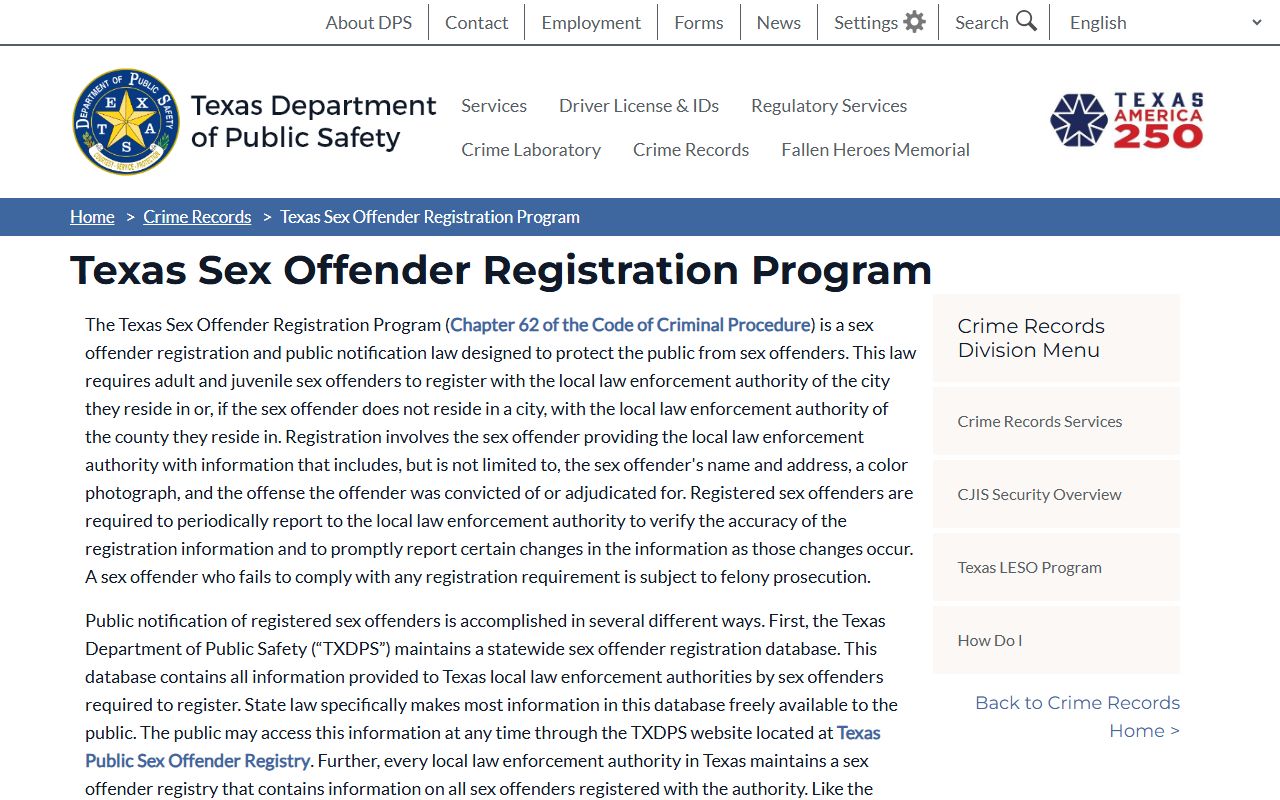
DPS says the public registry shows a registrant's name, registered address, color photograph, and the offense, while data like a Social Security number, driver license, phone, and employer details are not public.
The registry rules come from the Code of Criminal Procedure. You can read the framework in Texas Code of Criminal Procedure § 62.
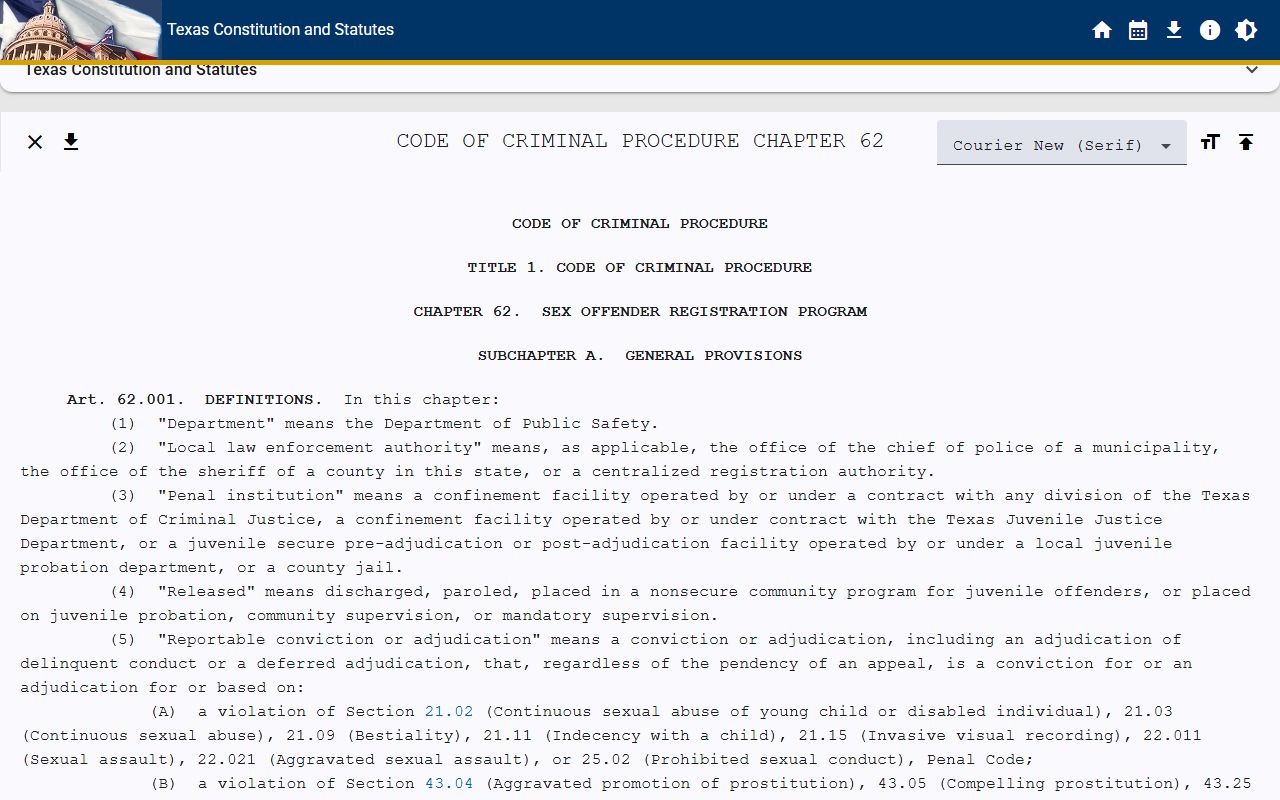
The statute sets who must register, for how long, and which details the public may see.
Parole and Probation Information
After prison, many people serve a period of parole. Parole in Texas is overseen by the Texas Board of Pardons and Paroles, which sets release decisions and supervision conditions. County-level probation, called community supervision, is handled locally and tied to the sentencing court. Violating parole or supervision conditions can send a person back into custody, so reporting rules matter.
Texas Board of Pardons and Paroles
Statewide parole and clemency authority
Parole decisions and supervision conditions
Linked from TDCJ inmate information resources
TDCJ links parole and reentry resources from its main inmate page. You can find those links through the TDCJ inmate information page.
Community supervision, the Texas term for probation, is run at the county level and tied to the court that sentenced the person. A supervision officer sets check-ins, fees, and conditions such as treatment or community service. Missing a required report or failing a condition can trigger a motion to revoke and a new court setting. Parole and probation are different tracks, but both add rules a person must follow after leaving custody, and both can lead back to jail if the rules are broken.
Reentry Resources in Williamson County
Coming home from custody is easier with help. Central Texas has civil legal aid and self-help groups that support people after release with records, family law, and basic rights. TDCJ also runs a Rehabilitation and Reentry Division for people leaving state prison. The two organizations below serve eligible residents in the region.
- Texas RioGrande Legal Aid - free civil legal help for eligible low-income Texans.
- Volunteer Legal Services of Central Texas - local pro bono civil legal help, listed by the county.
- TexasLawHelp - self-help guides and forms, including expunction and nondisclosure.
Texas RioGrande Legal Aid serves much of the region. You can reach it through the Texas RioGrande Legal Aid site.

Legal aid can help with the civil side of reentry, from family matters to clearing eligible records.
Volunteer Legal Services of Central Texas is listed by the county as a self-help resource. You can reach it through the Volunteer Legal Services of Central Texas site.

This group connects people with volunteer attorneys for civil legal needs after release.
Civil Rights Restoration After Release
Some rights return after a sentence ends. In Texas, a person with a felony conviction may register and vote once the sentence is fully discharged, which includes any incarceration, parole, and probation. Firearm rights and certain job and licensing limits are more complex and may need legal review. Clearing eligible records through expunction or nondisclosure can also help with housing and work. For the record-clearing path, see the arrest records page.
Restoring rights is rarely automatic across the board. Voting comes back on its own once supervision ends, but a person should still confirm registration before an election. Other rights, like the ability to hold certain licenses, may require time, a clean record, or a separate legal step. A reentry-focused attorney or a legal aid group can explain which rights apply to a given case and what paperwork, if any, is needed.
Common Williamson County Release Questions
Families often have the same two worries when someone is released. Quick answers help.
Why does the jail roster no longer show the person? A booking drops off the active roster once the person is released or transferred. That can mean a bond was posted, charges were dropped, a short sentence ended, or the person moved to state prison. Check the TDCJ locator for state custody, and register on VINELink so you are alerted to any future change.
How do I learn the exact release time? The county does not publish release times or property-return steps online. Call the Sheriff's Office to confirm, and have the person's name, date of birth, and booking number ready. For a state prisoner, the projected release date on the TDCJ record is the best estimate, but it can change.