
Getting a Marriage License in Williamson County
Marriage licenses are issued by the Williamson County Clerk, who serves as the local registrar for birth, marriage, and death records. The office sits in the Justice Center in Georgetown, with recording and vitals on the basement level. Both applicants generally apply together for a license, which is then returned for recording after the ceremony.
Texas law sets the basic rules. Applicants bring a government photo ID, and there is no blood test. A waiting period applies after the license is issued unless a statutory exception or a premarital education course waives it. Texas also recognizes informal, or common-law, marriage by declaration or by proof of agreement, living together, and holding out as married. You can read the marriage and divorce provisions in Texas Family Code § 6.
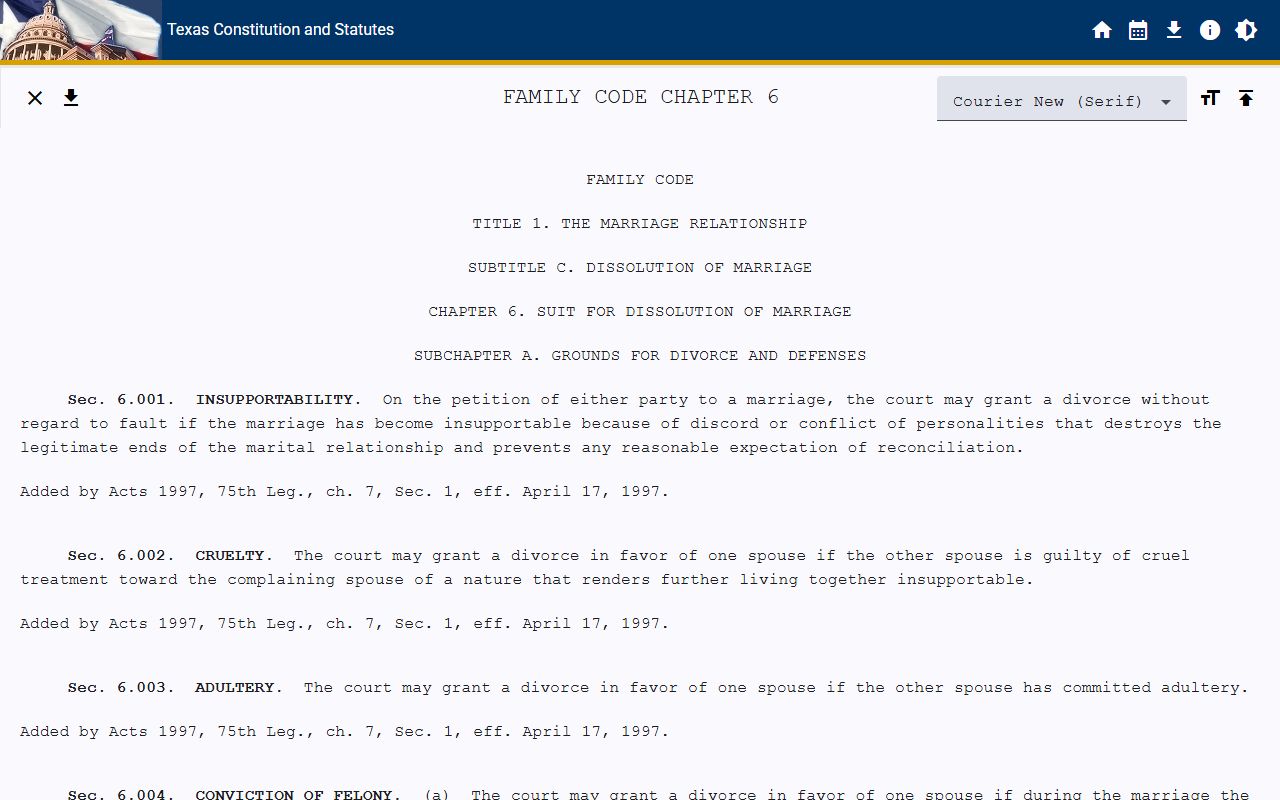
The Family Code sets who may marry, the waiting period, and how a marriage can be dissolved.
How to Apply for a Marriage License
The steps below follow Texas practice. Confirm the County Clerk's current hours and fee before you go, since those can change.
- Confirm the County Clerk's license hours and current fee.
- Gather a government photo ID for each applicant and any premarital education certificate.
- Apply together at the County Clerk's office, or use an online option if offered.
- Observe the Texas waiting period after issuance unless it is waived.
- Have the ceremony performed by an authorized officiant.
- Return the signed license to the County Clerk for recording, then request certified copies.
Marriage License Application Fields
The application asks for a few core pieces of information from each person. The exact form is the County Clerk's, so confirm any extra fields when you apply.
| Field | Required | Notes |
|---|---|---|
| Applicant 1 and Applicant 2 names | Yes | Full legal names of both people. |
| Government photo ID | Yes | Required under Texas law for each applicant. |
| Premarital education certificate | No | May reduce the fee or waive the waiting period. |
| License return after ceremony | Yes | The signed license must be returned for recording. |
Williamson County Marriage and Divorce Fees
The District Clerk sets clear copy fees for divorce records. Marriage license and certified marriage copy fees are set by the County Clerk and should be confirmed before you apply, since the research here does not fix a current dollar amount. The table below shows the known District Clerk copy fees plus a note on County Clerk charges.
| Item | Amount |
|---|---|
| Certified divorce decree copy (District Clerk) | $1 per page |
| Non-certified copy (District Clerk) | $1 per page |
| Non-certified electronic copy | $1 for up to 10 pages, then $0.10 per added page |
| Credit card convenience fee | $2 per transaction ($5 minimum service fee) |
| Marriage license / certified marriage copy | Set by County Clerk (confirm current fee) |
How to Look Up Williamson County Marriage Records
Marriage records are County Clerk records. The County Clerk runs an official public records search and keeps recorded marriage documents. You can reach the office and its search tools through the county County Clerk page. The County Clerk's public search portal also supports index and full-text lookups of recorded documents.
To find a record, have the names of both spouses and an approximate date. A certified copy of a marriage record comes from the County Clerk, not from the District Clerk. The County Clerk earned a state Five Star Vital Registration Award for 2023, a sign of its role as local registrar. Older marriage records may take longer to locate, so an exact date or the full names of both spouses helps the clerk pull the right document on the first try.
How to Find Williamson County Divorce Records
Divorce is a district or family court matter, so the District Clerk holds the file. You can request a divorce decree or other copies using the District Clerk's record request form, with the cause number, party names, file date, and document type. Non-certified copies may be emailed or faxed, but certified copies cannot be emailed; they are mailed or picked up in person. Divorce cases are filed where venue is proper under state law.
You can read the venue rules used in civil and family filings in Texas Civil Practice and Remedies Code § 15.
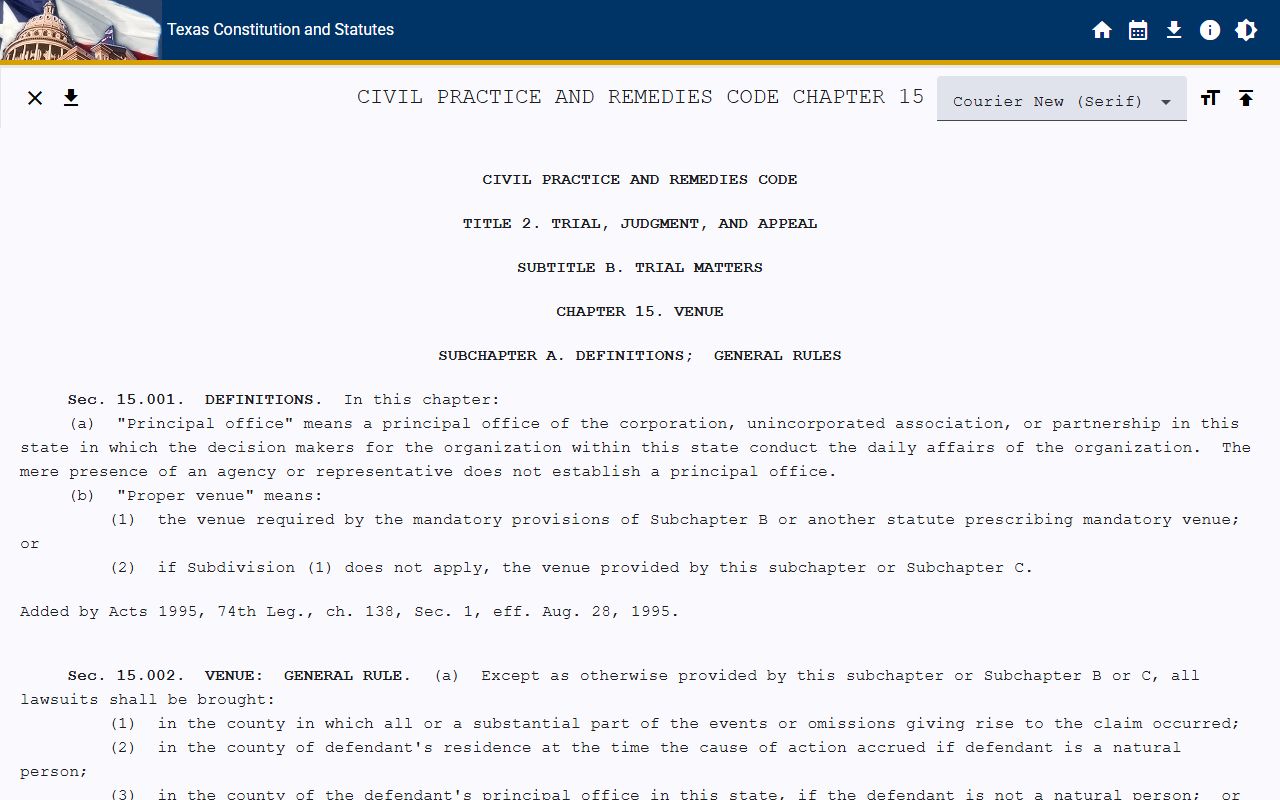
Venue rules decide which county and court a divorce can be filed in, which matters when spouses live apart.
Not every family record is open. Adoption records are confidential under state law, and records that identify minors are restricted. So a divorce file may be public while a related adoption stays sealed. You can read the adoption confidentiality provisions in Texas Family Code § 162.
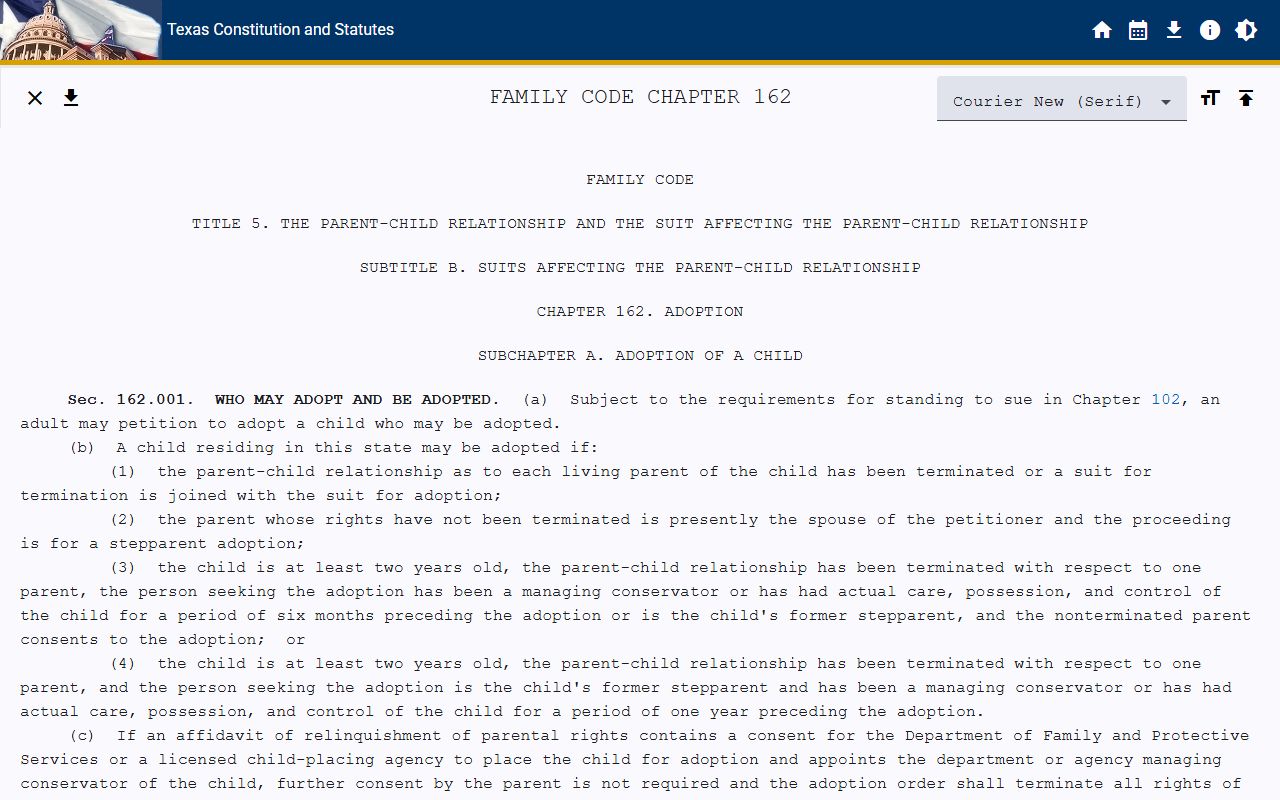
Adoption files are closed except by court order, which is why they do not show up in an ordinary family record search.
Filing for Divorce in Williamson County
A person can file for divorce with or without a lawyer. Self-represented litigants may file civil and family pleadings in person, by mail, or electronically through the state eFileTexas portal. Attorneys must e-file. The District Clerk processes family e-filings during business hours, usually within 24 to 48 hours. Court staff cannot give legal advice or tell you what to file.
Free self-help forms make pro se filing easier. TexasLawHelp offers guides and forms for divorce, custody, and related family matters. You can find them at TexasLawHelp.
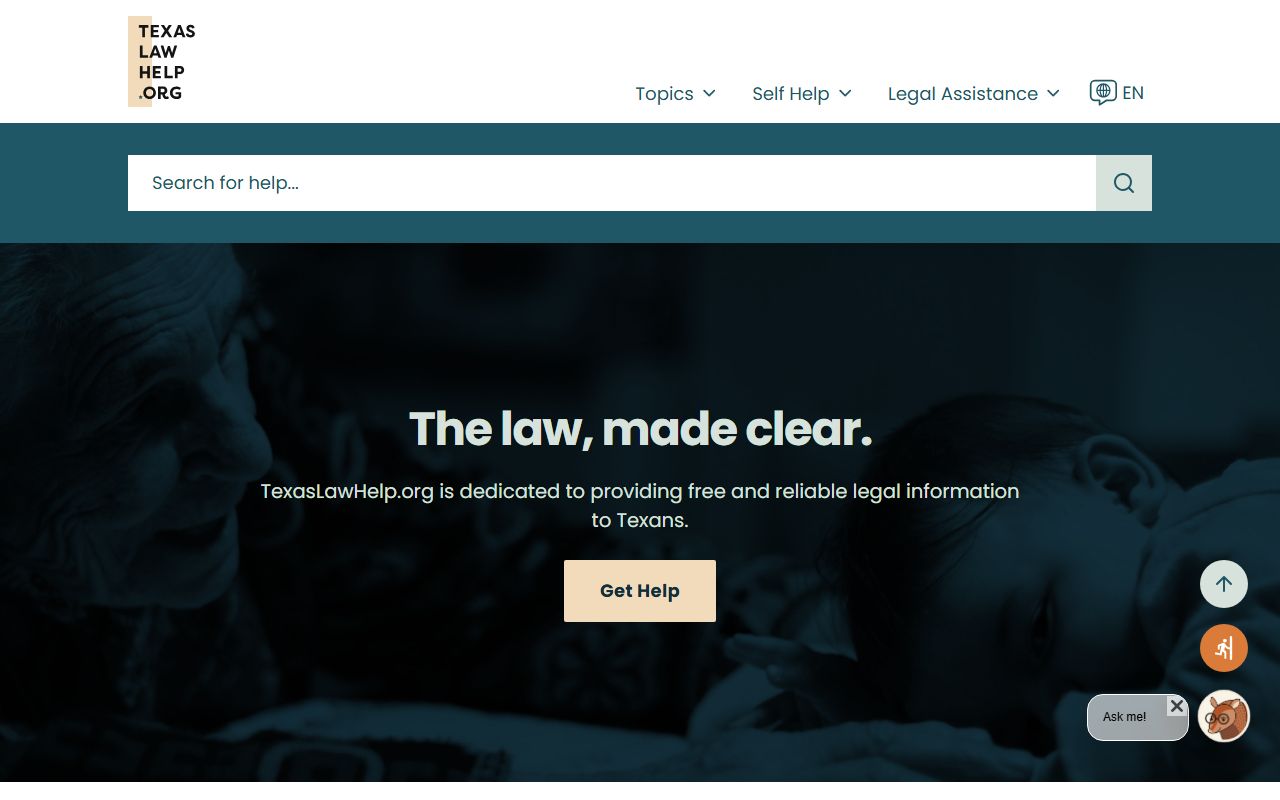
TexasLawHelp is a strong starting point for anyone filing a divorce without an attorney. Emergency filings, such as a temporary restraining order, should be coordinated with the District Clerk before they are presented to the court.
Who Can Perform a Marriage in Texas
Texas allows several officiants to conduct a ceremony. Licensed or ordained Christian ministers and priests may officiate, as may Jewish rabbis and officers of religious organizations authorized to conduct ceremonies. Judges and justices authorized by statute may also perform marriages. In Williamson County, Justices of the Peace perform weddings, and several precinct pages list wedding services among their duties.
The officiant signs the license after the ceremony, and the couple returns it to the County Clerk for recording. Only a recorded license produces an official marriage record, so returning the document matters as much as the ceremony itself. If you plan a JP wedding, contact the precinct ahead of time to confirm scheduling.
Common-Law Marriage in Texas
Texas recognizes informal, or common-law, marriage. A couple can establish it by signing a declaration of informal marriage with the County Clerk, or by proving three things: an agreement to be married, living together in Texas as spouses, and holding out to others as married. There is no set number of years that creates a common-law marriage by itself.
This matters for records and for divorce. A common-law marriage is a legal marriage, so ending it still requires a divorce through the district court. A couple who signed a declaration will have that record with the County Clerk, while a divorce of an informal marriage runs through the District Clerk like any other.
Getting Certified Copies
You need a certified copy for many legal purposes, such as proving a divorce or a marriage in another matter. Order a certified divorce decree from the District Clerk and a certified marriage record from the County Clerk. Certified copies from the District Clerk are mailed by regular First Class mail or picked up in person; they are not emailed. The District Clerk asks you to allow up to three days for a request to finish, so plan ahead if you have a deadline. The office cannot mail copies to a third party, and it will not release a document sealed by order or statute unless the law allows it.
Williamson County Vital Records and the State Registry
The County Clerk is the local registrar for birth, marriage, and death records in Williamson County. For records held statewide, Texas keeps a Department of State Health Services vital statistics registry, but local marriage records are handled by the County Clerk. The contact card below shows the local office.
Williamson County Clerk (Local Registrar)
405 Martin Luther King St.
Georgetown, TX 78626-4901
512-943-1515
Recording & Vitals: Mon-Fri 8am-4:30pm
For divorce decrees, the District Clerk is the office to contact, since divorce is a court record. You can reach it through the county District Clerk page.