
About the Williamson County Clerk's Office
The County Clerk is an elected office with a four-year term, and the role is one of the oldest in Texas government, set in the state in 1836. Nancy E. Rister serves as the Williamson County Clerk. Under the Texas Constitution, the county clerk is the clerk of the county and commissioners courts and the recorder of the county. The office earned a state Five Star Vital Registration Award for 2023 for its vital records work.
The County Clerk handles the non-district side of a split clerk system. Felony, higher civil, and divorce cases go to the District Clerk instead. You can reach the County Clerk through the county County Clerk page.
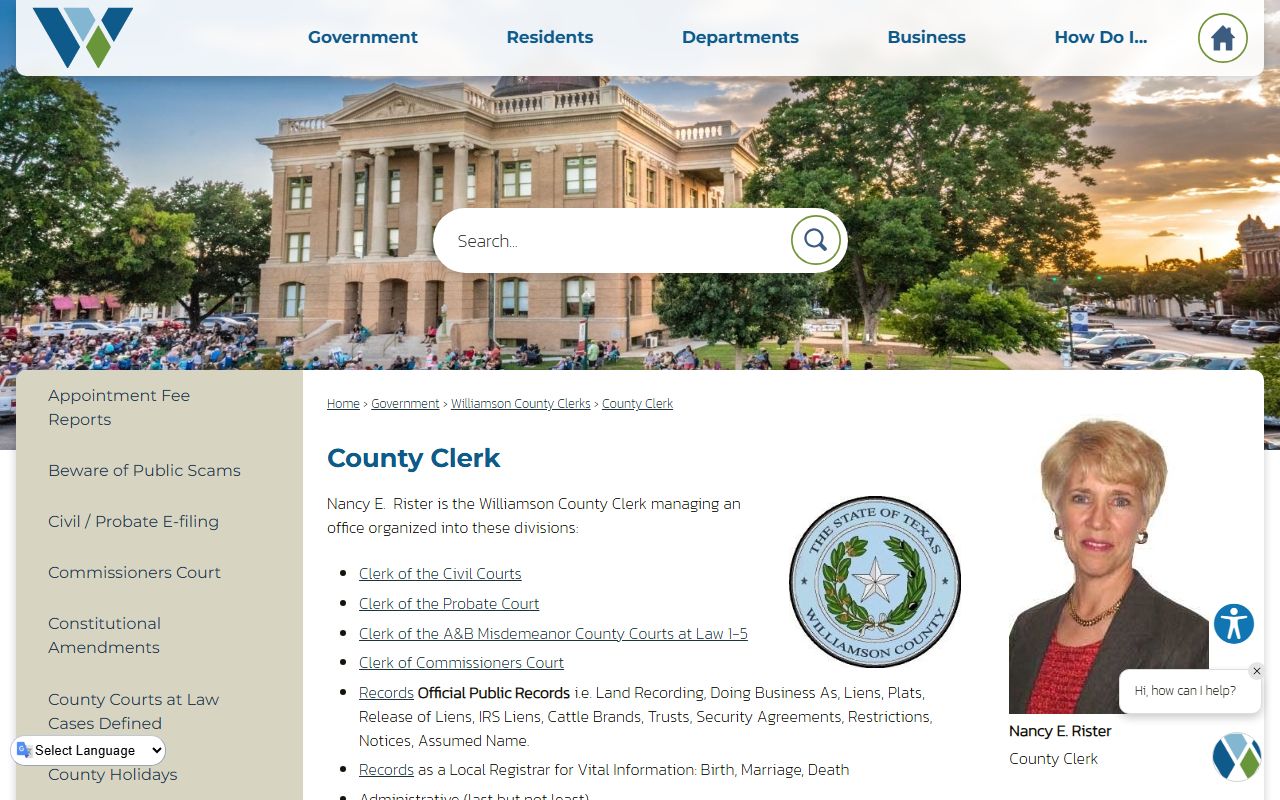
The page lists the clerk's divisions, the office addresses, and the vital and official records the office keeps. It is the best starting point before a visit, since the office spans recording, vital records, probate, and the county-court functions handled at the Justice Center.
Williamson County Clerk
Clerk: Nancy E. Rister
405 Martin Luther King St. (mailing: P.O. Box 647, Jarrell, TX 76537-0647)
Georgetown, TX 78626-4901
512-943-1515
Recording & Vitals (basement): Mon-Fri 8am-4:30pm
Courts (2nd floor): Mon-Fri 8am-5pm
What the County Clerk Does in Williamson County
The County Clerk runs several divisions under one office. It serves as clerk for the civil courts and the probate court, clerk for the County Courts at Law, clerk of the Commissioners Court, and keeper of official public records. As local registrar, it records birth, marriage, and death. That mix is why so many everyday records run through this one office.
- Clerk for the County Courts at Law, including Class A and B misdemeanors.
- Clerk for the probate court and civil county-court matters.
- Keeper of official public records like deeds, liens, and assumed names.
- Local registrar for birth, marriage, and death records.
- Clerk of the Commissioners Court and keeper of its minutes.
How to Search Williamson County Clerk Records
The County Clerk runs an official public records search for recorded documents and Commissioners Court minutes. You can search by grantor or grantee name, document type, or document number, and you can choose how broadly to search. You can open the tool at the County Clerk public records search portal.
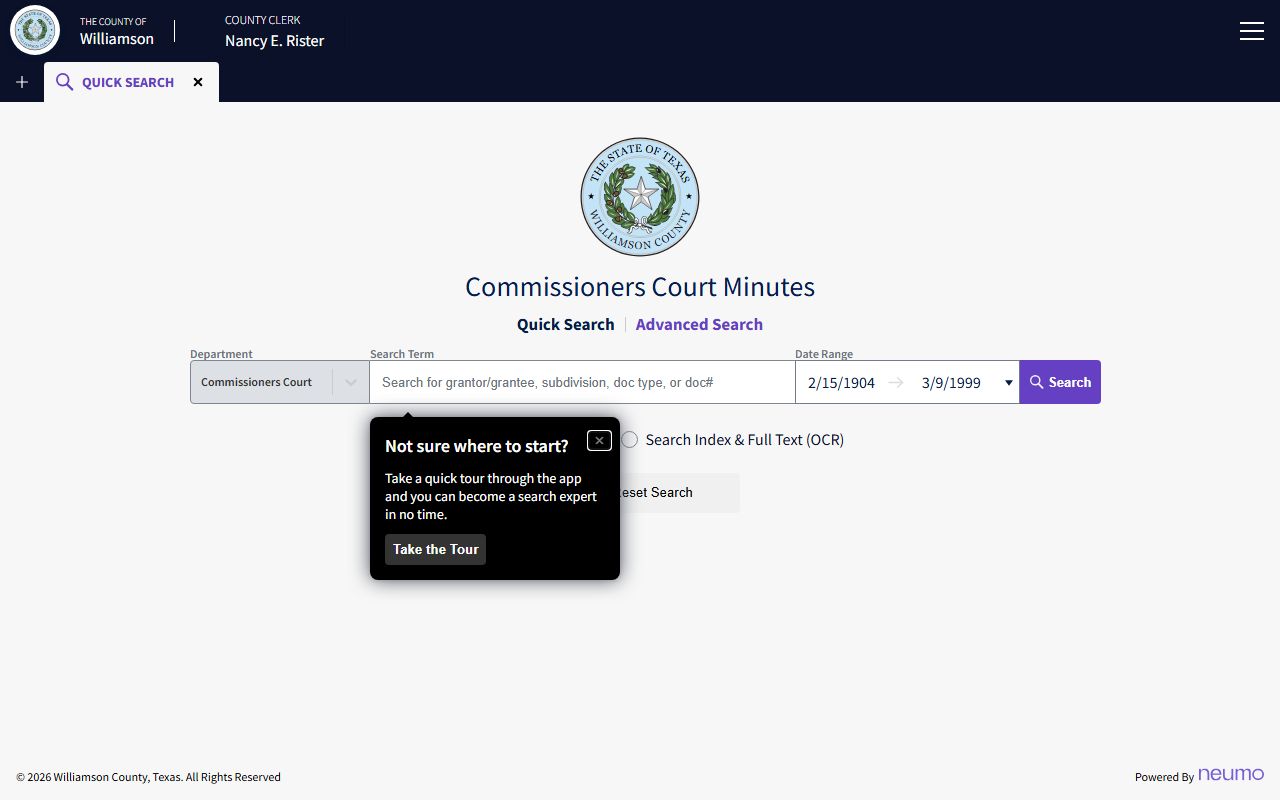
The portal lets you pick an index-only search or a full-text search of document contents using OCR.
| Field Label | Type | Required | Notes |
|---|---|---|---|
| Department | Dropdown | No | Defaults to Commissioners Court; other record sets may be available. |
| Search Term | Text | No | Grantor, grantee, subdivision, document type, or document number. |
| Date Range | Date | No | Narrow results to a time window. |
| Recorded Date | Filter | No | Last 24 hours up to last 1 year. |
| Search Scope | Radio | No | Index only, or index and full text (OCR). |
Official Public Records the County Clerk Keeps
The official public records are the heart of the County Clerk's recording work. These are filings that touch property, business, and other legal interests, and they are recorded for the public. Many can be searched online before you ever request a copy.
- Deeds, plats, liens, and releases of liens.
- Assumed name or DBA filings and cattle brands.
- Trusts, security agreements, restrictions, and notices.
- Federal tax liens and other recorded legal interests.
The Commissioners Court minutes are also kept here, since the County Clerk is clerk of that court. Together these records make the County Clerk the county's official recorder.
Recording a Document and Business Filings
Recording is one of the County Clerk's core jobs. When you record a deed, a lien, or a release, the office stamps it, indexes it, and makes it part of the official public record. That public record is what title companies, lenders, and the public rely on to know who holds an interest in property. Recording and vitals sit on the basement level of the Justice Center.
Business owners use the County Clerk too. An assumed name, often called a DBA, is filed here when a business operates under a name other than its legal one. The office also records cattle brands, trusts, security agreements, and similar interests. Most recorded documents become searchable in the public records portal, so you can confirm a filing online soon after it is recorded. Bring the original document and any required information, and confirm the recording fee before you file.
Marriage and Vital Records
As local registrar, the County Clerk records birth, marriage, and death. Marriage licenses are issued here, and certified marriage records come from this office, not the District Clerk. Recording and vitals sit on the basement level of the Justice Center, with their own weekday hours. For marriage license steps and how to find a marriage record, see the marriage and divorce records page.
Vital records carry privacy rules. Birth records in particular are restricted for a set period and are released only to qualified people, so the office may ask for proof of identity and eligibility. Marriage records are more openly available once recorded. The county's strong vital records work earned it a state Five Star award, a sign the office takes accuracy and access seriously. When you order a certified vital record, bring a valid ID and the names and dates that help the clerk find the right file.
County Court Functions
The County Clerk is clerk for the County Courts at Law, which the county lists as Courts at Law No. 1 through No. 5. The office files Class A and Class B misdemeanor cases and manages them through to closing or appeal. It also collects court costs and fines ordered in those cases. Civil cases in a County Court at Law may be filed when the amount in controversy is over $500 and not more than $250,000.
Probate and guardianship records run through the County Clerk as well. For the probate process and forms, see the probate records page. The split is simple to remember: district-court files go to the District Clerk, while county-court, probate, marriage, and official records go to the County Clerk.
The County Courts at Law are led by Judges Brandy Hallford, Laura Barker, Doug Arnold, John B. McMaster, and Will Ward. These courts handle a heavy mix of misdemeanor, civil, probate, and family matters, and the County Clerk keeps the file for each. To track a county-court case online, use the county judicial records system, then request copies from the County Clerk when you need a certified document.
Fees and Certified Copies
The County Clerk publishes a separate fee schedule and a recording fees document, so exact amounts should be confirmed before you file or order copies. A certified copy carries the office's seal and is needed for many legal and personal uses, such as proving a marriage or recording a property interest. Bring the document details, the names involved, and any recording or case information so the clerk can locate the right record. For records the office keeps online, you may be able to view an index entry before you request a full copy. The mailing address for the County Clerk differs from the physical office, so check whether you are sending mail to the Jarrell post office box or visiting the Georgetown counter. Recording and vitals close earlier in the afternoon than the court functions, so plan a visit around the right office hours.
Common Williamson County Clerk Questions
Two questions come up most often at the County Clerk's counter.
District Clerk or County Clerk, which one do I need? Match the record to the office. Felony, higher civil, and divorce cases live with the District Clerk. Marriage, probate, misdemeanors, deeds, and official records live with the County Clerk. If you are unsure, the type of case or document usually points the way, since the two offices handle different parts of the system.
Can I find a deed online? Often yes. The County Clerk's public records portal lets you search recorded documents by grantor or grantee name, document type, or document number, with an index-only or full-text option. You can confirm a filing and view index details online, then request a certified copy from the office when you need an official version.