
Arrest Records in Williamson County
Arrest records come from law enforcement, not the courts. When deputies or city police make an arrest, the person is taken to the Williamson County Jail, booked, and screened. The booking record holds the name, the booking number, the charges, and the custody status. The Sheriff's Office runs the jail through its Corrections Bureau, which holds a daily population of about 600 people. After booking, an arrestee is brought before a magistrate, usually within hours, since the county holds bail hearings at the jail seven days a week.
An arrest record is not the same as a criminal court record. The arrest record is the law enforcement file about the booking. The court record begins when prosecutors file charges and a case opens in the district or county court. A conviction record only exists after a plea or verdict. This page leads with arrest records; for the full case history, plea, and judgment, see the Williamson County court records page.
From Arrest to Magistrate in Williamson County
After an arrest, the booking process moves quickly. The person is transported to the Williamson County Jail, booked, identified, and screened. Next comes the magistrate. The county's Magistrate's Office is staffed by four associate judges who hold bail hearings at the jail seven days a week, every day of the year, under Article 15.17 of the Code of Criminal Procedure. At that first appearance, the judge advises the arrestee of the charges, the bail amount, the conditions of release, and any emergency protective order.
The magistrate does not decide guilt or give legal advice. The role is to set the early terms of a case and protect rights. Magistrates also review and authorize arrest warrants and certain search warrants, including blood search warrants in some criminal cases. A bond amount set at this stage often shows up on the jail record, which is why an arrest record can list both the charge and the bail.
How to Search Williamson County Arrest Records
The county points the public to the Williamson County Records Inquiry for jail and arrest lookups. The Corrections Bureau page says to search by first and last name or by booking number. The same system covers court and jail records. You can open it from the county Public Judicial Records page. For recent serious cases, the District Attorney also posts results, and statewide criminal history comes from the Texas Department of Public Safety.
- Open the Williamson County Records Inquiry from the county Court and Jail Lookup link.
- Search by first and last name, or by booking number if you have it.
- Open the record to view charges, bond, custody status, and any court date that is set.
- For a full case file or certified copy, follow the case to the clerk who holds it.
Statewide criminal history searches run through DPS rather than the county. They cover convictions and other reportable events across Texas, and they follow separate access rules.
What a Williamson County Arrest Record Shows
A booking record packs a lot into a single page. It ties the person to a booking number, the charges, and the custody status, and it often links to the case once charges are filed. The magistrate sets bond at the first appearance, so a bond amount and conditions may appear too. The table below lists the fields you can expect on a typical jail or arrest record.
| Field | What It Shows |
|---|---|
| Name | The full legal name of the person booked. |
| Booking / SO Number | The jail's ID number for the booking, used for mail and money too. |
| Booking Date | The date and time the person was booked into the jail. |
| Charges / Offenses | The charges that led to the arrest, with cause numbers when filed. |
| Bond | The bail amount and type, and any release conditions set by the magistrate. |
| Custody Status | Whether the person is in custody, released, or transferred. |
| Court Date | The next setting, shown when the court has scheduled one. |
Arrest Records vs. Criminal Court Records
The two records come from different offices and cover different stages. The arrest record is made at booking by law enforcement. The court record opens when charges are filed and the case lands in a court. One person can have an arrest record with no court case if charges are never filed.
| Arrest Record | Criminal Court Record | |
|---|---|---|
| Source | Sheriff / Police | Court Clerk |
| Created When | Booking | Charges filed |
| Contents | Booking info, charges, custody status | Pleadings, motions, disposition |
Charges vs. Convictions
Being charged is not the same as being convicted. A charge is an accusation that rests on probable cause. A conviction needs proof beyond a reasonable doubt and follows a plea or a verdict. Both can appear in public records, so read the disposition before you draw any conclusion. A dismissed charge means the case ended without a conviction.
| Charge | Conviction | |
|---|---|---|
| Stage | Accusation | Verdict or plea |
| Burden of Proof | Probable cause | Beyond reasonable doubt |
| Public Record | Yes | Yes |
Sealed vs. Expunged Records
Texas uses two main tools to clear a record: expunction and nondisclosure. Expunction is the stronger remedy. It removes eligible arrest, court, and criminal-history records, and the law treats them as if they never existed. An order of nondisclosure seals a record from public view but keeps it open to criminal justice agencies and certain employers. Nondisclosure often follows deferred adjudication once the waiting period passes.
| Sealed (Nondisclosure) | Expunged | |
|---|---|---|
| Visibility | Hidden from public | Destroyed / treated as never existed |
| Law Enforcement | Still accessible to agencies | Very limited access |
| Eligibility | Deferred adjudication or qualifying supervision, set waiting periods | Dismissals, acquittals, no charges filed, pardons, some juvenile cases |
The nondisclosure rules sit in the Government Code. You can read the framework in Texas Government Code § 411, which covers criminal history and orders of nondisclosure.
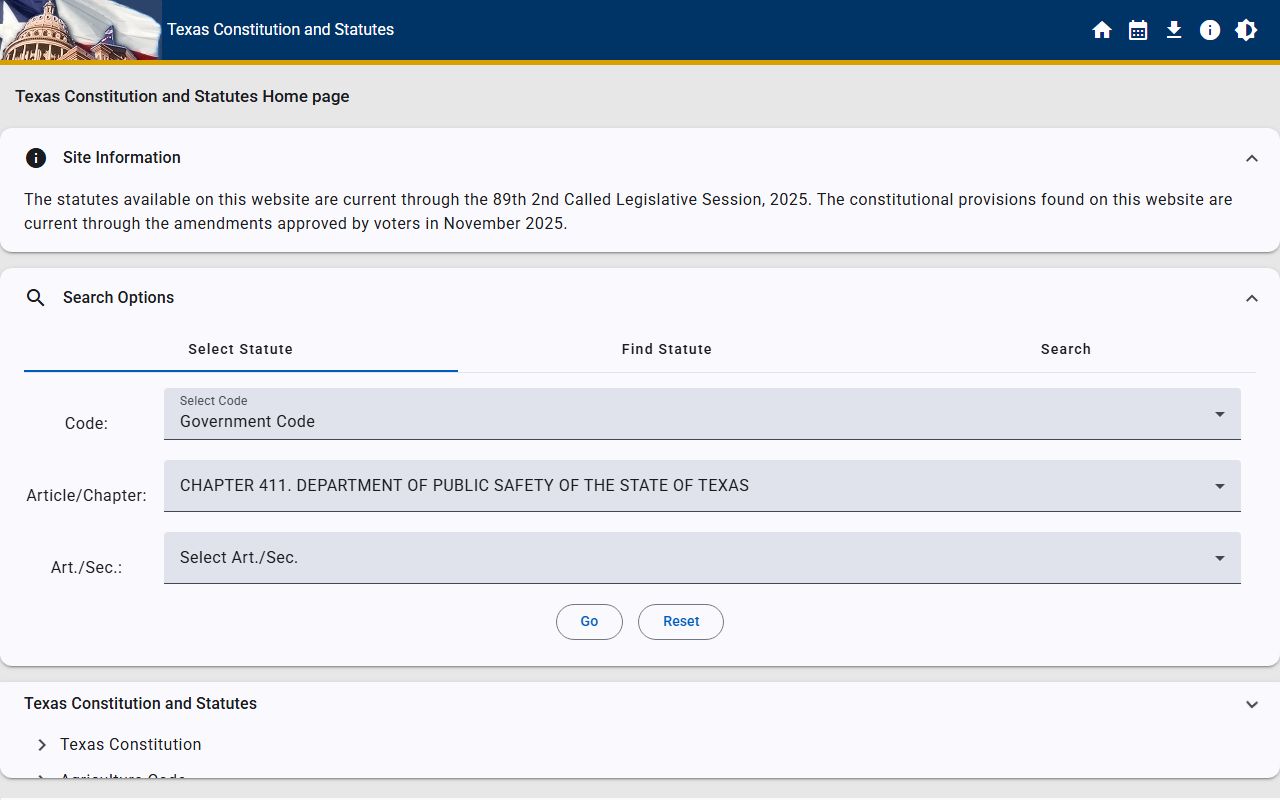
The statute explains who keeps access to a sealed record, which matters for jobs and licensing.
Mugshots and Booking Photos
A booking photo, or mugshot, is taken during the jail intake process. Booking details such as name, charges, and booking number show up in the county Records Inquiry. The county's official portal does not clearly publish a public mugshot gallery, so a photo may not appear in every search. Be cautious with private mugshot websites, since they are not official and often charge to remove an image. The county jail record is the reliable source for booking facts.
If a private site lists a booking, treat the county record as the truth and the private listing as a copy that may be stale. An arrest shown on a third-party page may have ended in a dismissal that the private site never updated. Always confirm the current status through the county Records Inquiry, and check the court file for the disposition before you rely on any photo or charge you find online.
Felony Prosecution and Federal Cases
Once charges are filed, the District Attorney for the 26th Judicial District prosecutes felony and county criminal cases. District Attorney Shawn Dick leads that office from the Justice Center, and its press releases list recent felony results. A person who cannot afford a lawyer may qualify for court-appointed counsel through the county's indigent defense process, though appointment is not automatic. You can review the program on the county Indigent Defense page.
Some cases are federal, not local. Federal crimes in this area are prosecuted by the U.S. Attorney's Office for the Western District of Texas, and federal defendants are tracked through federal systems rather than the county jail. You can learn about federal prosecution from the U.S. Attorney for the Western District of Texas.
Federal charges follow a separate track, so a federal case will not show up in the county jail or clerk search.
Statewide Criminal Records Search
The Texas Department of Public Safety keeps the statewide criminal history. Its Crime Records Service handles criminal history access, plus expunction, nondisclosure, and juvenile sealing questions. DPS says a person should get their own criminal history and consult a lawyer before filing to clear a record, because DPS may oppose a petition. You can start at the DPS Criminal Records Service page.
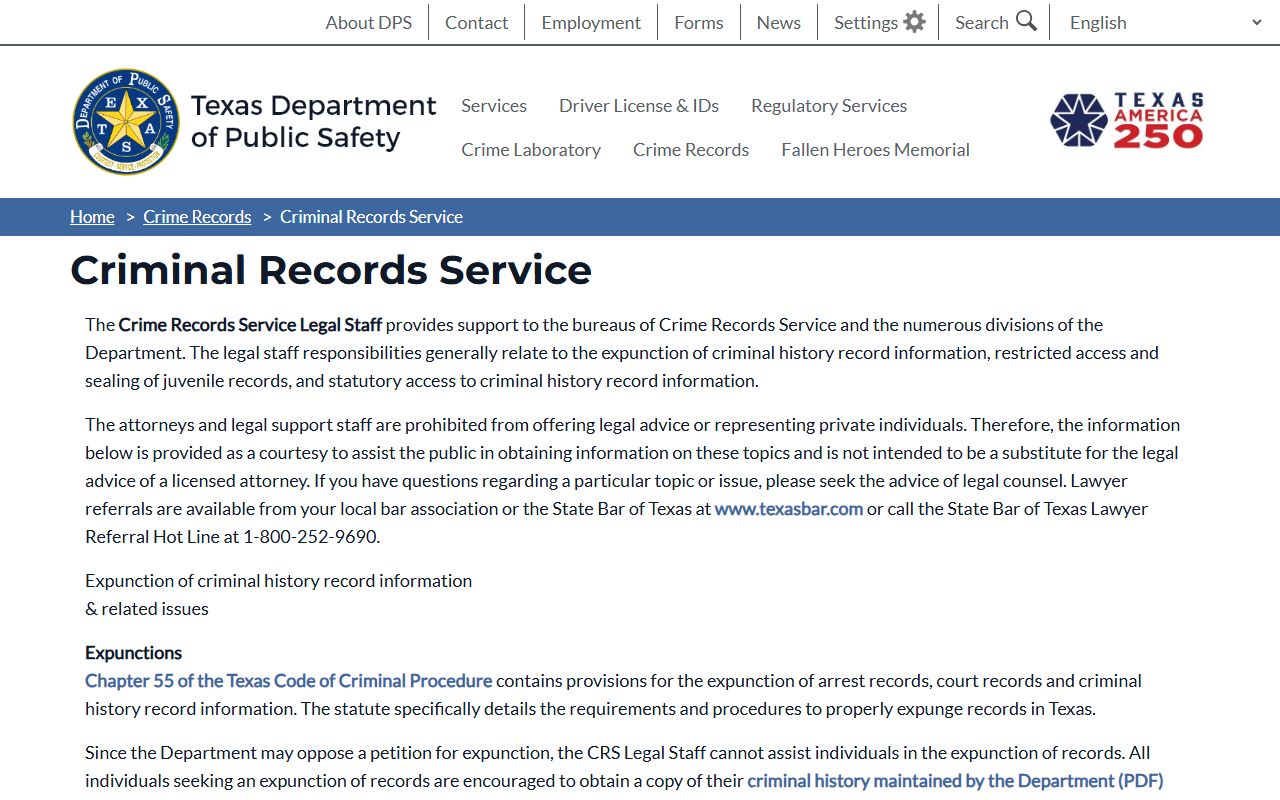
The DPS page also explains pardons, identity misuse, and how to find a lawyer for a record-clearing case.
Background Check Considerations
A casual record lookup is not the same as a background check under federal law. The Fair Credit Reporting Act sets rules for reports used for hiring, housing, credit, and similar decisions. DPS explains that some criminal history is public while other data is not, and it sets out what the public registry shows. For any decision covered by the FCRA, use a proper consumer reporting agency, not a quick online search. You can read DPS rules on public and nonpublic data on the DPS criminal history FAQ.
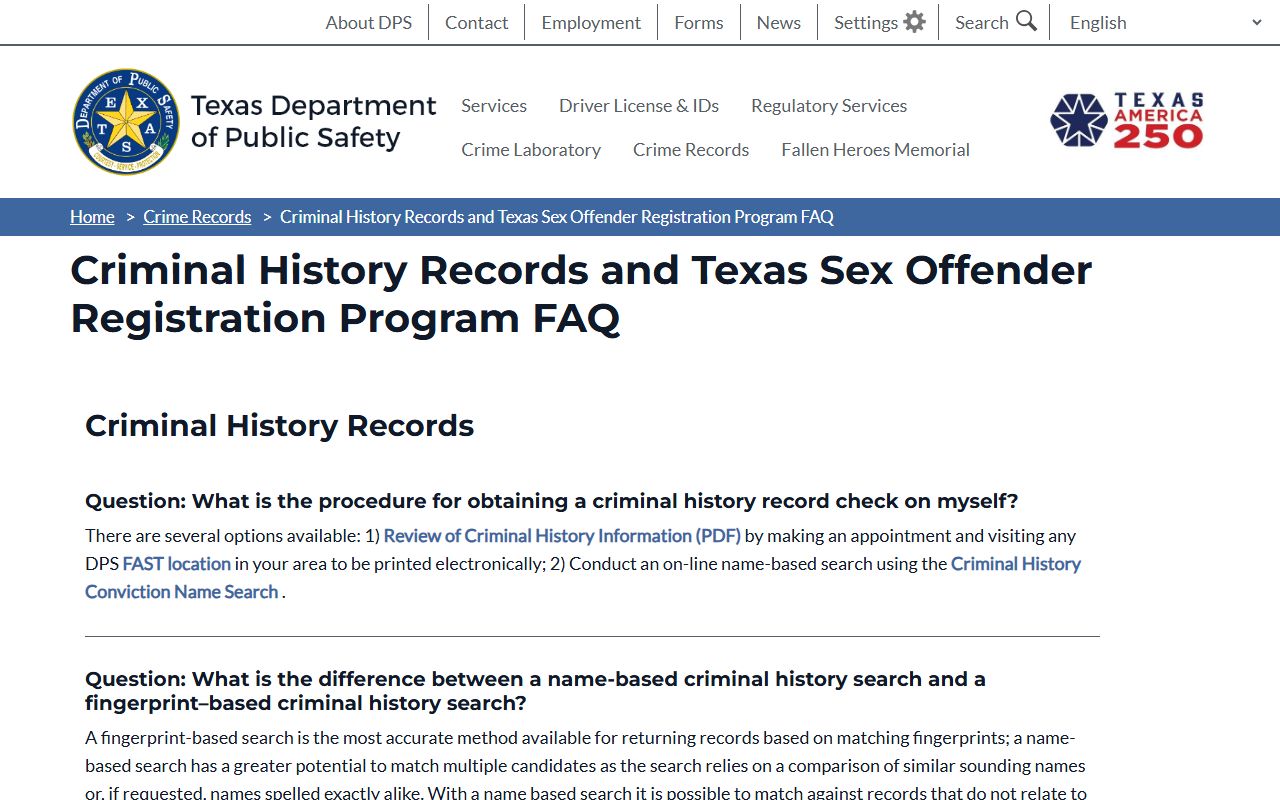
The FAQ clarifies which fields are released to the public and which are withheld by law.
Important: This site is a private reference and is not a consumer reporting agency under the FCRA; do not use it for employment, tenant, credit, or insurance decisions.
Restricted Criminal Records in Williamson County
Some criminal records are closed to the public. Juvenile records are confidential and many seal automatically once the law's conditions are met. Expunged and nondisclosed records drop out of public search. Records tied to an ongoing investigation, sealed search warrants, and victim-identifying data may be withheld too. The law-enforcement exception lets agencies hold back certain investigation material.
Juvenile records follow their own chapter of the Family Code. You can read the juvenile justice and sealing rules in Texas Family Code § 58.
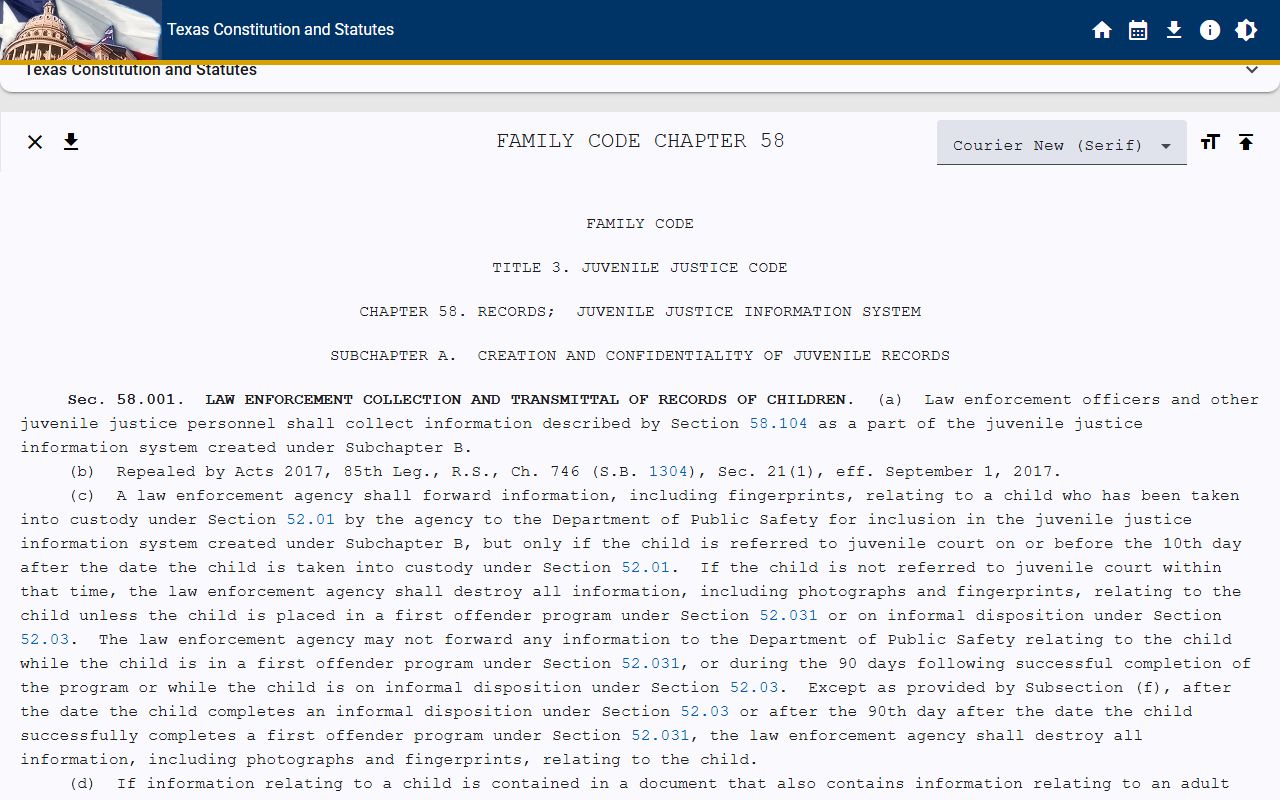
The statute sets when juvenile records seal and who may still see them, which is much narrower than for adult cases.
If you believe a record should be sealed or removed, the path runs through the courts, not a quick online form. The District Clerk handles expunction files and asks that requests include the cause number and the applicant's full name. Because DPS may oppose a petition, most people work with a lawyer and pull their own DPS criminal history first.