
How to Search Williamson County Court Records
The county runs its court search through the Williamson County Public Judicial Records site. County pages name it as the official place to find District Court pending cases, court assignment, court dates, Justice of the Peace records, County Clerk judicial cases, and jail records. The District Courts page says the site holds all cases pending in the district courts except those restricted by law. You can open it from the county's Public Judicial Records page. For official documents, you still file a request with the clerk who holds the file.
Have a few things ready first. A full legal name helps, and a cause number helps more. The County Clerk also runs a separate official records search for deeds, marriage, and county-court matters. Pick the right tool before you type.
- Decide which court has your case. District Clerk for felony, civil, family, and divorce; County Clerk for misdemeanors, probate, and marriage; Justice Courts for traffic, evictions, and small claims.
- Open the Public Judicial Records site from the county Court and Jail Lookup link.
- Search by party name when you do not know the cause number, using full legal names.
- Search by cause number when you have it, since that pulls the exact case.
- Open the case to read the docket, then request a certified copy from the proper clerk if you need an official document.
Williamson County Court Records Search Fields
The public portal and the county's jail search share a common set of fields. The Corrections Bureau page confirms you can search by first and last name or by booking number. Court searches add cause-number and party-name lookups, plus court and date filters. The table below lists the fields county pages describe.
| Field Label | Type | Required | Notes / Format |
|---|---|---|---|
| First Name | Text | No | Used with last name for jail and party searches. |
| Last Name | Text | No | Full legal name works best. |
| Case / Cause Number | Text | No | The clerk-assigned case ID; pulls one exact case. |
| Party Name | Text | No | Used when the cause number is unknown. |
| Booking Number | Text | No | For jail record lookups in the Records Inquiry. |
| Court / Court Type | Dropdown | No | District, County Court at Law, or Justice Court. |
| Court Date | Date | No | Shown when a setting exists for the case. |
Types of Williamson County Court Records
The county makes many record types because each court handles its own caseload. District civil cases include lawsuits over the lower-court limit, injunctions, and tax matters. Felony cases run through the district courts as well. County Courts at Law take Class A and B misdemeanors and civil cases where the amount in controversy runs over $500 up to $250,000. The County Clerk keeps probate, guardianship, and marriage records. Justice Courts add evictions, small claims, and Class C traffic cases.
Texas keeps a clear chart of how these courts fit together. You can review the structure on the Texas Judicial Branch About Texas Courts page.
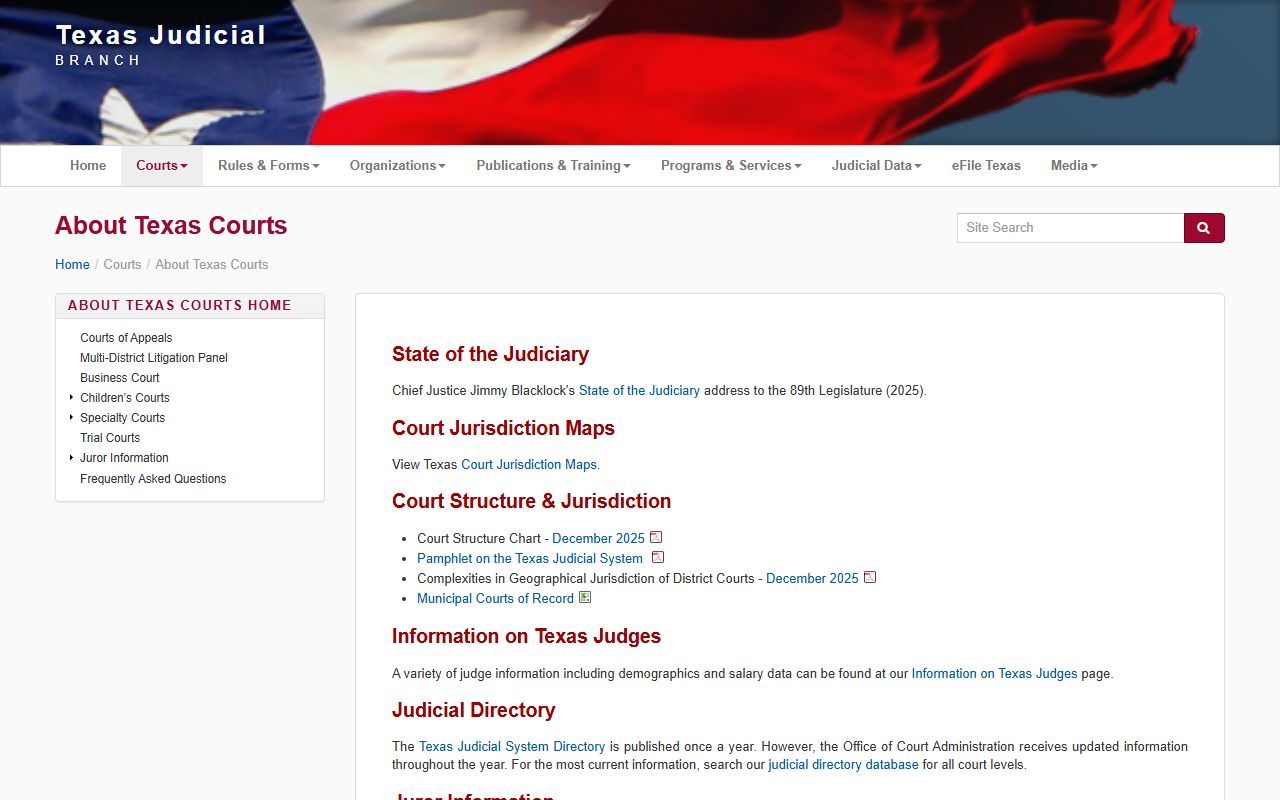
The chart shows where district, county, and justice courts sit, which helps you guess where a record lives.
- Civil district records, such as petitions, answers, motions, orders, and judgments.
- Felony criminal records, including the charging document, bond, plea, judgment, and sentence.
- Misdemeanor records filed by the County Clerk in the County Courts at Law.
- Family and divorce records kept by the District Clerk, with some matters restricted.
- Justice Court records for traffic, evictions, and small claims.
County Court at Law cases follow their own rules. The County Clerk explains them on the County Courts at Law Cases Defined page.
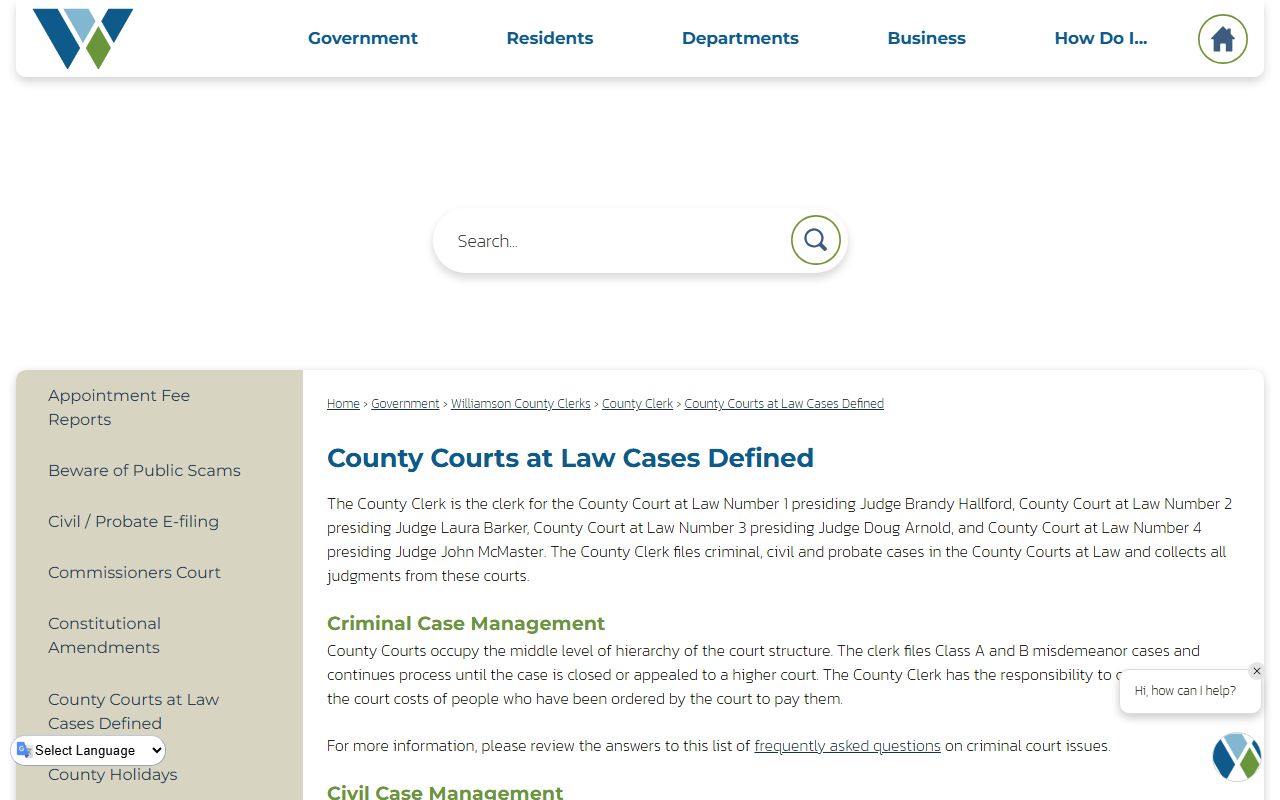
This page breaks down the criminal, civil, and probate cases the County Courts at Law manage.
What Williamson County Court Records Show
A case record lists the cause number, the court, the parties, and a docket of events. The District Courts page confirms the public site shows court assignment and a court date when set. Documents may be open, redacted, or available only by a clerk copy request. The table below shows the common fields on a public case record.
| Field | What It Shows |
|---|---|
| Case Number | The unique cause number the clerk assigns. |
| Court Assignment | Which court holds the case. |
| Filing Date | The date the clerk accepted the case. |
| Parties | Plaintiff and defendant, or the State and defendant in criminal cases. |
| Case Type | Civil, criminal, family, juvenile, probate, or traffic. |
| Docket Entries | A dated log of filings, settings, orders, and judgments. |
| Disposition | The current or final result of the case. |
A few terms come up again and again when you read a Williamson County case. Knowing them keeps you from misreading a result.
- Cause number
- The unique case number a clerk assigns at filing.
- Docket
- The dated list of every event in a case.
- Disposition
- The result of a charge or claim, such as dismissed or disposed.
- Deferred adjudication
- Supervision where the court holds off on a finding of guilt.
Public Access Framework for Williamson County Court Records
Texas treats court records differently from ordinary government records. The Public Information Act covers agency administrative records, but court case files follow court rules and clerk practices. The Act itself even sets the judiciary apart. So a request to a county department is not the same as a certified-copy request to a clerk. Personal identifiers like Social Security and driver license numbers are commonly redacted before a record is shown.
Who can request? Most case records are open to anyone. Sealed, juvenile, and expunged records are not. Justice Court jurisdiction is fixed by statute, which sets what those courts may hear and keep.
Key Statutes:
Texas Government Code § 552 - the Public Information Act, including a provision on access to the judiciary's information.
Texas Government Code § 27 - sets Justice of the Peace court jurisdiction over civil and Class C matters.
Texas Code of Criminal Procedure § 55 - governs expunction of eligible arrest and court records.
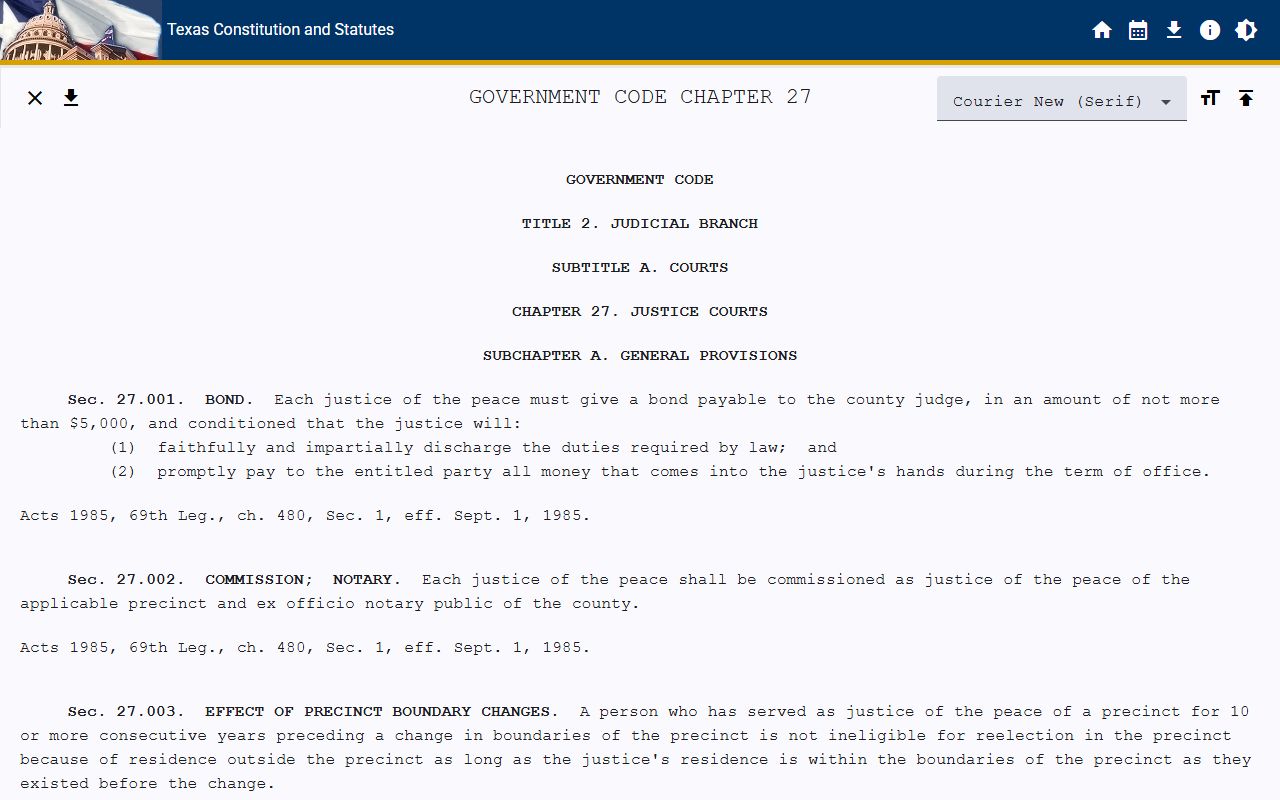
The justice court statute sets the limits that decide which records a precinct court can hold and release.
Records That Are Sealed or Confidential in Williamson County
Some files never appear in a public search. Juvenile and adoption records are confidential by statute. Sealed civil records, expunged criminal records, and records under an order of nondisclosure are closed or hidden from public view. Mental-health and medical records, grand jury matters, and victim-identifying data are also protected. The District Clerk's request form states that documents sealed by order or statute will not be released unless the law allows it.
To view a sealed record, you usually must be a party, an attorney of record, or an authorized agency. Otherwise you may need a court order. The clerk cannot give legal advice, so most people who need sealed records work with an attorney. For criminal sealing, see the arrest records page on expunction and nondisclosure.
Civil court records carry a strong presumption of openness in Texas. A judge may seal a civil record only under set rule standards, and the public can ask to take part in a sealing hearing. That means even when a party wants a file closed, the court must weigh the public's interest before it agrees. Juvenile and family files follow stricter rules, and many seal automatically once the law's conditions are met.
In-Person Court Record Requests
You can request district court records in person at the District Clerk's office in the Justice Center, or by mail and email. The office processes electronic and non-certified copies by email or fax, but certified copies cannot be emailed. They are mailed by regular First Class mail or picked up in person. The form asks you to allow up to three days for a request to finish.
Williamson County District Clerk
405 Martin Luther King St. (P.O. Box 24)
Georgetown, TX 78626
512-943-1212
Mon-Fri 8am-noon, 1pm-5pm (no financial transactions after 4:30pm)
The County Clerk handles official public records through a separate search. You can use the County Clerk public records search for deeds and recorded documents.
Copy Fees for Williamson County Court Records
Court records are public, but copies cost money. The District Clerk sets clear rates on its record request form. Paper copies cost the same whether plain or certified. Electronic copies use a tiered price. The office does not take American Express or personal checks. Credit card payments carry a convenience fee and a minimum service fee. For an expunction, the clerk charges a certified-mail fee for each agency that lacks an email address. Always confirm current figures with the clerk before you send payment.
| Item | Amount |
|---|---|
| Certified paper copy | $1 per page |
| Non-certified paper copy | $1 per page |
| Non-certified electronic copy | $1 for up to 10 pages, then $0.10 per added page |
| Credit card convenience fee | $2 per transaction ($5 minimum service fee) |
| Expunction certified-mail (per agency without email) | $25 |
Note: Certified copies cannot be emailed; the District Clerk mails them or releases them in person to the requester.