
How to Look Up Williamson County Jail Population Data
The county's own figures live with the Sheriff's Corrections Bureau, which publishes the jail's bed space and an approximate daily population. The Texas Commission on Jail Standards also collects statewide jail reports that can include county facilities. For national figures, the Bureau of Justice Statistics releases jail data each year. You can read the county's jail numbers on the Corrections Bureau page.
Read these numbers with care. The county reports a rated bed space and an approximate daily population, not a live, minute-by-minute count. The daily figure is an estimate that moves with bookings and releases. State and national data sets update on their own schedules, often once a year, so they show trends rather than today's count.
Williamson County Jail Capacity Overview
The county jail is a single complex near the Justice Center in Georgetown. A Direct Supervision facility opened in late 2003 and brought total bed space to 1,104. The county reports an approximate daily population of about 600. The table below shows the county's published capacity and daily population.
| Facility | Rated Capacity | Approximate Daily Population |
|---|---|---|
| Williamson County Jail | 1,104 beds | About 600 |
Average Daily Population
The county's approximate daily population is about 600 people. Against 1,104 beds, that puts the jail near 54 percent of its listed bed space. By that published estimate, the jail is not operating above its stated capacity, though real daily counts rise and fall. The county does not publish a year-by-year average daily population in its main pages, so a precise year-over-year change is not available without a direct request to the Sheriff's Office.
Williamson County Jail Key Figures
A few official figures frame the size and cost of the jail. The Corrections Bureau runs on an annual budget of about $32 million. Using that budget against an approximate daily population of 600 gives a rough operating cost, though the budget also covers transport, security, records, and courthouse bailiffs. The table below collects the county's published numbers and one clearly labeled estimate.
| Measure | Figure |
|---|---|
| Rated bed space | 1,104 beds |
| Approximate daily population | About 600 |
| Occupancy of listed beds | About 54 percent |
| Corrections Bureau budget | About $32 million per year |
| Rough cost per inmate-day (estimate) | About $146 (simple arithmetic, not an official figure) |
Note: The per-inmate-day figure is a simple estimate from budget divided by population and days; it is not an official county cost-per-inmate number.
Corrections Budget and Jail Staffing
The jail's size shows up in the county budget. For 2025-2026, the Commissioners Court adopted a total county budget of $702,428,992, with a General Fund of $401,201,232. The budget added 45.5 full-time positions and converted one part-time role to full-time. Thirteen of those positions support the new 512th District Court, which adds court capacity as caseloads grow.
Public safety drew several of the new positions. The budget funded four additional Sheriff's Office deputies and three corrections officers. More corrections staff matters for a jail that holds about 600 people a day and provides 24-hour security, court transport, and inmate services. Staffing levels, not just bed count, shape how a jail of this size runs day to day.
Demographic Breakdown
Williamson County does not publish an age, race, or sex breakdown of the jail population in the materials located. That kind of dashboard is more common at the state and national level. For demographic context, the Bureau of Justice Statistics reports national jail demographics, conviction status, and admissions across recent years.
Because the county shares capacity and an approximate daily population but not a demographic dashboard, any age or race figures should be drawn from state and national sources and clearly marked as such. A resident who needs a county-specific demographic count can request it from the Sheriff's Office, since the agency holds the underlying records.
Pretrial vs. Sentenced Population
The county does not post a pretrial versus sentenced split in its main pages. This is an important measure, because a large share of jail populations nationally are people awaiting trial rather than serving a sentence. The Bureau of Justice Statistics tracks conviction status in its national jail data, which gives useful context even when a county figure is not published.
For a Williamson County number, the split would have to come from the Sheriff's Office or from Texas Commission on Jail Standards reporting. Until then, the safe statement is that the county publishes capacity and an approximate daily population, not a pretrial or sentenced breakdown.
Misdemeanor vs. Felony Population
A misdemeanor versus felony breakdown is also not published in the county's main pages. Felony cases run through the district courts and the District Clerk, while Class A and B misdemeanors run through the County Courts at Law and the County Clerk. The jail holds people from both tracks, plus those held on warrants or pending magistration. To see the charges tied to any single person in custody, use the live roster on the Williamson County inmate records page rather than an aggregate count.
Mental Health and Medical Population
The county provides medical, mental health, and dental care to people in custody, along with education and ministry services. It does not publish the share of the population receiving each service. The county does run a Felony Mental Health Docket in the 26th District Court, which works to move qualifying people with serious mental illness out of the standard jail track and into treatment-based supervision. That program is one sign of how the county addresses mental health needs in the justice system, even without a published medical-population count. The county also runs a DWI Drug Court, a Mental Health Court, and a Veterans Court through County Court at Law No. 2, which divert some people away from standard jail time.
National and State Context
Two outside sources fill the gaps. The Bureau of Justice Statistics publishes national jail data, including incarceration rates, admissions, and conviction status across recent years. You can review its work in the BJS preliminary 2024 jail data release.
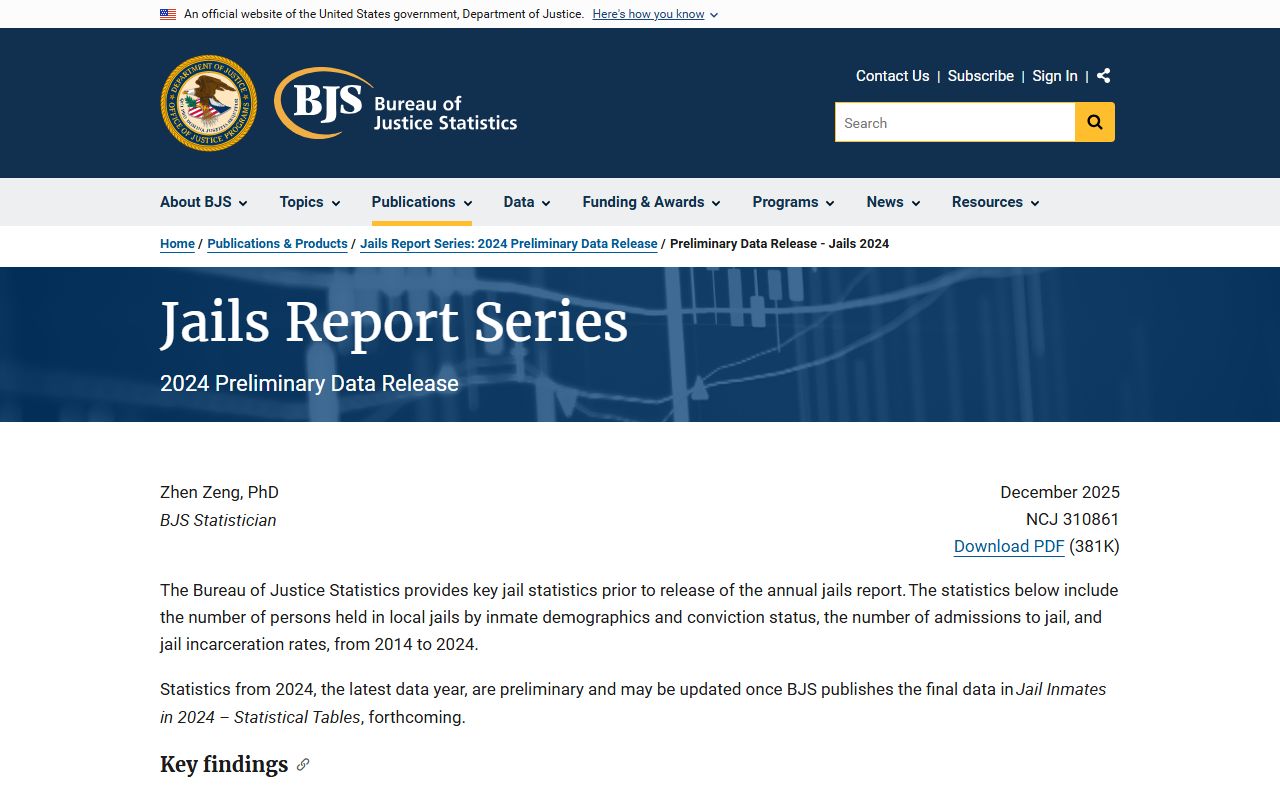
The BJS release is the standard national reference for jail population size, demographics, and conviction status.
The Vera Institute tracks incarceration trends at the state level, with methodology that lets you compare Texas over time. You can explore Texas figures through the Vera Texas incarceration trends data.
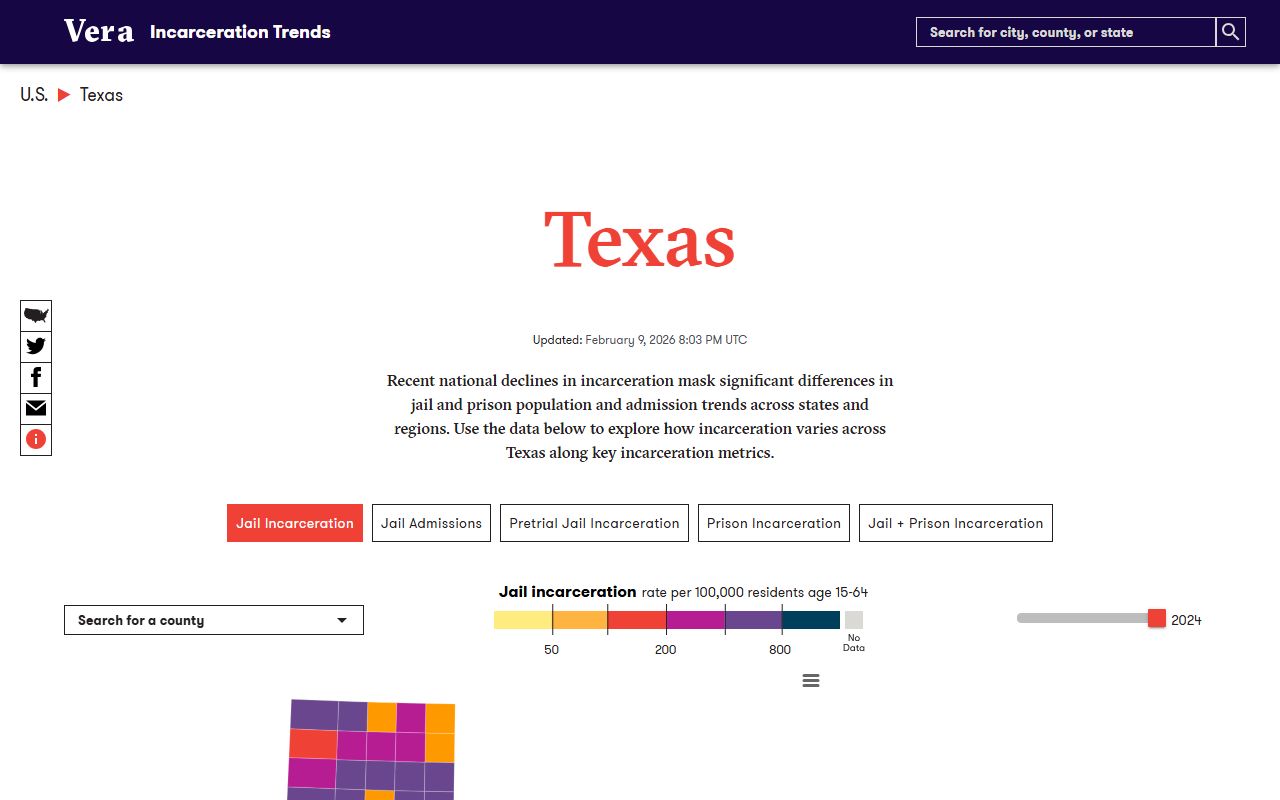
Vera's state data helps place the county's roughly 600-person daily jail population inside the larger Texas picture.
To compare fairly, watch the method behind each number. A rate per 100,000 residents lets you compare a fast-growing county like Williamson with the state or nation, but the county has not published its own per-100,000 jail rate. Until it does, the honest comparison uses the county's raw figures, about 600 people held against 1,104 beds, alongside the state and national rates that BJS and Vera report. Mixing a raw county count with a national rate without that caution can mislead.
Population Trends Over Time
The county did not publish a multi-year jail population dashboard in the sources located. For a trend line, the Texas Commission on Jail Standards annual reports and the BJS and Vera data sets are the better tools, since they track change over several years. National jail counts fell during the 2020 health emergency and then shifted again, so any single year should be read in context.
One local trend is clear from the budget. The county's 2025-2026 budget added staff tied to a new 512th District Court, plus four more Sheriff's deputies and three corrections officers. More courts and more staff point to rising caseloads and population pressure as the county grows north of Austin.
Searching for Williamson County Inmate Records by Name
This page covers aggregate jail population data, not individual lookups. To search for one person in custody by name or booking number, use the live roster on the Williamson County inmate records page, which draws from the county's records inquiry.
How to Request Williamson County Population Data
When a figure is not posted online, you can ask for it. County records that are not court case files fall under the Texas Public Information Act, which lets the public request records from a government body during normal business hours. A request to the Sheriff's Office could ask for the average daily population by year, a pretrial and sentenced split, or a charge-type breakdown, if the agency keeps those counts.
Be specific in the request. Name the time frame, the facility, and the exact figures you want, since a narrow request is easier to fill. The agency may charge allowed costs for the work. A request for aggregate counts is different from a search for one person, which runs through the live jail roster instead. Keep a copy of the request and any response for your records.
Where the Data Comes From
The county's capacity and daily population come from the Sheriff's Corrections Bureau. Statewide composition comes from the Texas Commission on Jail Standards, and national context comes from the Bureau of Justice Statistics and the Vera Institute. When numbers differ, the difference is usually the date and the method, since each source counts on its own schedule. For the county's own jail figures, the Corrections Bureau page is the primary source, and any number repeated elsewhere should trace back to it or to a state or federal report.