
Texas Public Information Act
The Texas Public Information Act is the state's open records law. It sets the policy that government is the servant, not the master, of the people, and it makes public information available during normal business hours unless an exception applies. The Act covers county offices, but it treats the judiciary differently, so court case records follow court rules instead. You can read the law in Texas Government Code § 552.
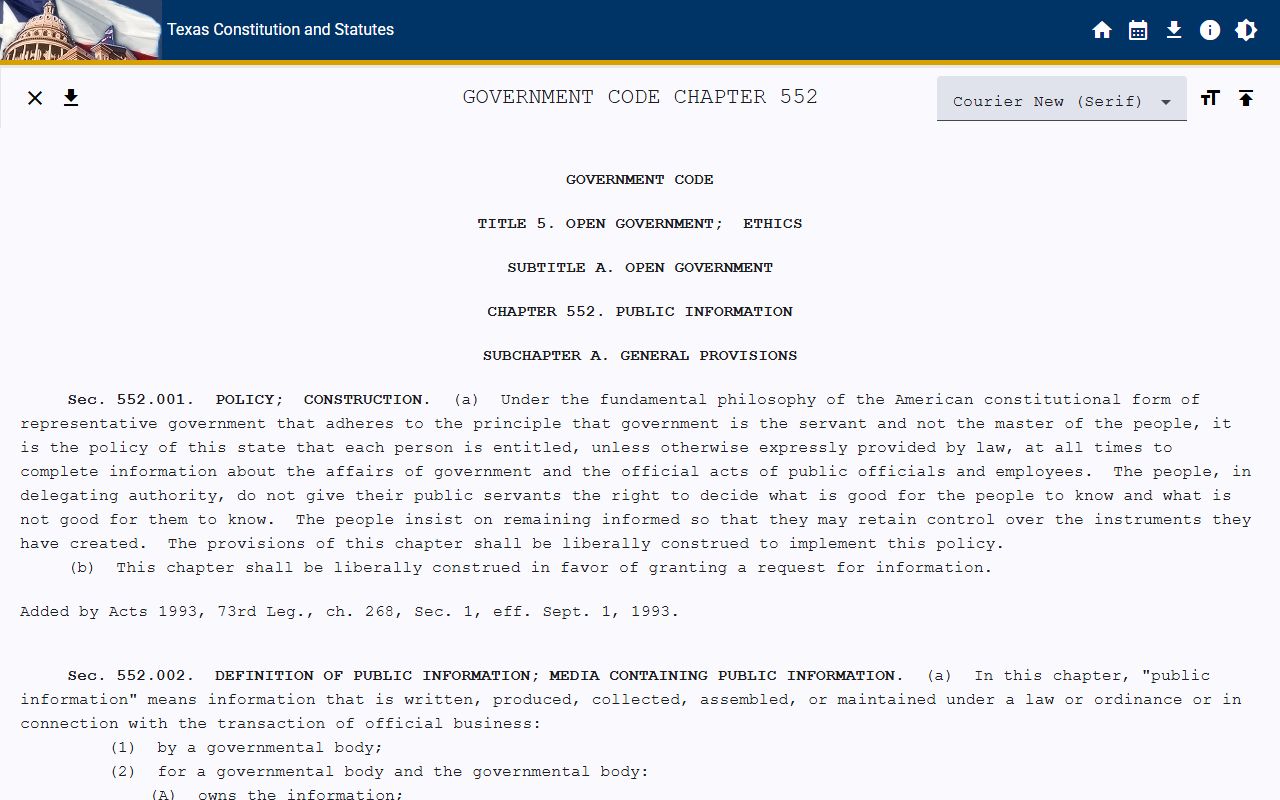
The Act spells out what is open, what may be withheld, and how a person can challenge a denial.
Almost anyone can file a request, and you do not have to say why you want the records. The office must respond, though it may withhold records that fall under an exception. For many withholdings, a county body must seek a ruling from the Texas Attorney General.
Court Records vs. Open Records in Williamson County
One distinction trips people up. Court case files are held by the judiciary, so they follow court rules, statutes, and clerk practices rather than the open records process. Administrative records of a county office, like a contract, a budget, or an email, fall under the Public Information Act. The two paths use different offices and different rules.
This matters in practice. To get a divorce decree or a criminal case file, you send a copy request to the District Clerk or County Clerk, not an open records request. To get a county department's spending or policy records, you file a public information request. Sending the wrong kind of request to the wrong office is the most common reason a search stalls.
What Records the County Clerk Maintains
The County Clerk keeps the county's official public records, well beyond court cases. These include land records and many filings that touch property and business. The County Clerk is also the local registrar for vital records. The county posts news and announcements too, which are public information in their own right.
- Deeds, liens, plats, and releases of liens.
- Assumed name or DBA filings and cattle brands.
- Marriage records and other vital records as local registrar.
- Commissioners Court minutes and county meeting records.
The county also keeps a public news archive with announcements and press items. You can browse it through the county news archive.
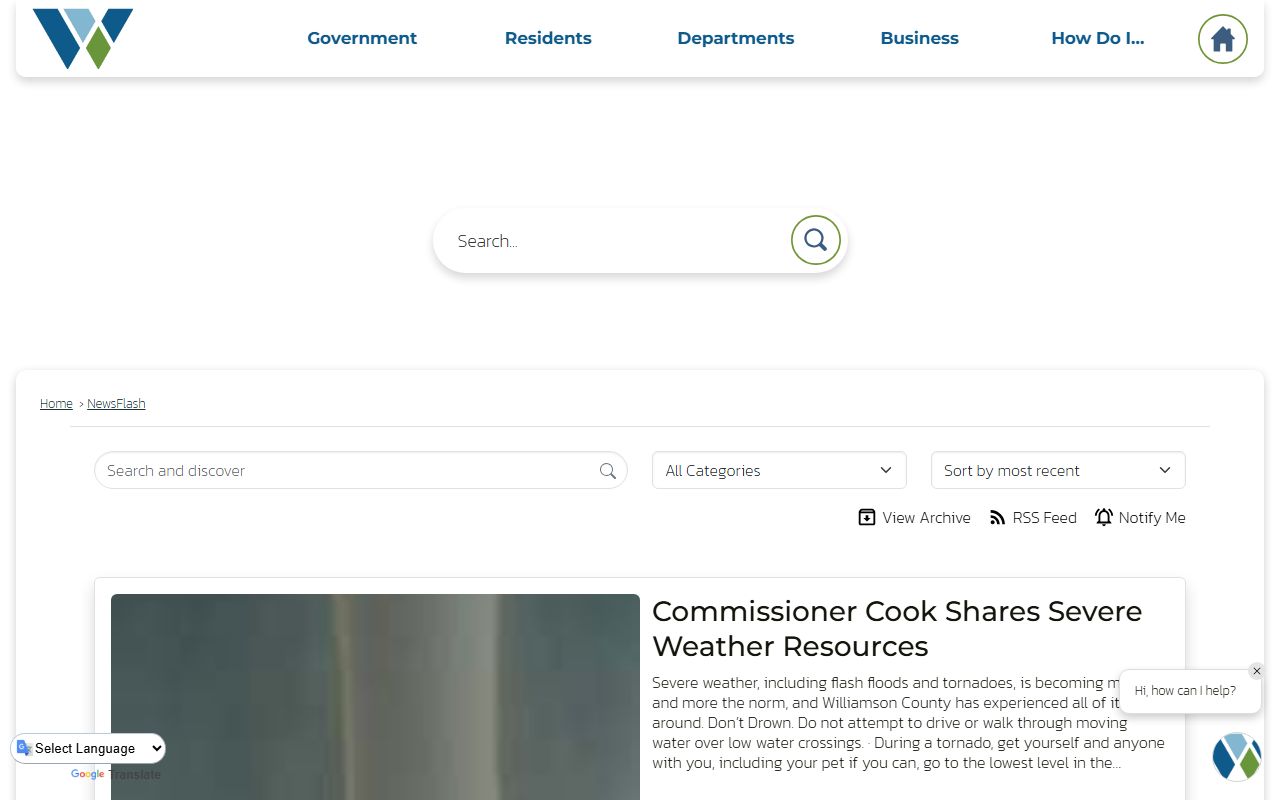
The archive is a quick way to find official county announcements without filing a formal request.
Many official records are searchable online without a formal request. The County Clerk runs a public records search that supports index and full-text lookups of recorded documents, so you can often find a deed or a recorded filing yourself. You can use the County Clerk public records search for grantor and grantee names, document types, and document numbers.
How to File a Public Records Request in Williamson County
A public records request is a written ask sent to the office that holds the records. Address it to the right county department, and describe the records clearly. The county provides Public Information Request links for its offices.
- Identify the office that holds the records, since the County Clerk, Sheriff, and District Attorney each keep their own.
- Describe the records you want as specifically as you can, with names and a date range.
- Submit the request in writing through the office's public information request channel.
- Wait for the response, which may include a request for clarification or a cost estimate.
- Pay any allowed fees, then receive the records or a written explanation of any withholding.
Public Records Request Form Fields
The Act does not require a special form, but a clear request includes a few basics. The fields below make a request easier to fill.
| Field | Required | Notes |
|---|---|---|
| Requester Name and Contact | Yes | So the office can reach you with the response. |
| Description of Records | Yes | Be specific; a narrow request is faster to fill. |
| Date Range | No | Helps the office find the right records. |
| Format Preference | No | Paper, electronic, or inspection in person. |
District Attorney Records and Press Releases
The District Attorney for the 26th Judicial District prosecutes felony and county criminal cases and handles its own public information requests. The office, led by District Attorney Shawn Dick, posts news and case outcomes the public can read. You can reach the office through the county District Attorney page.
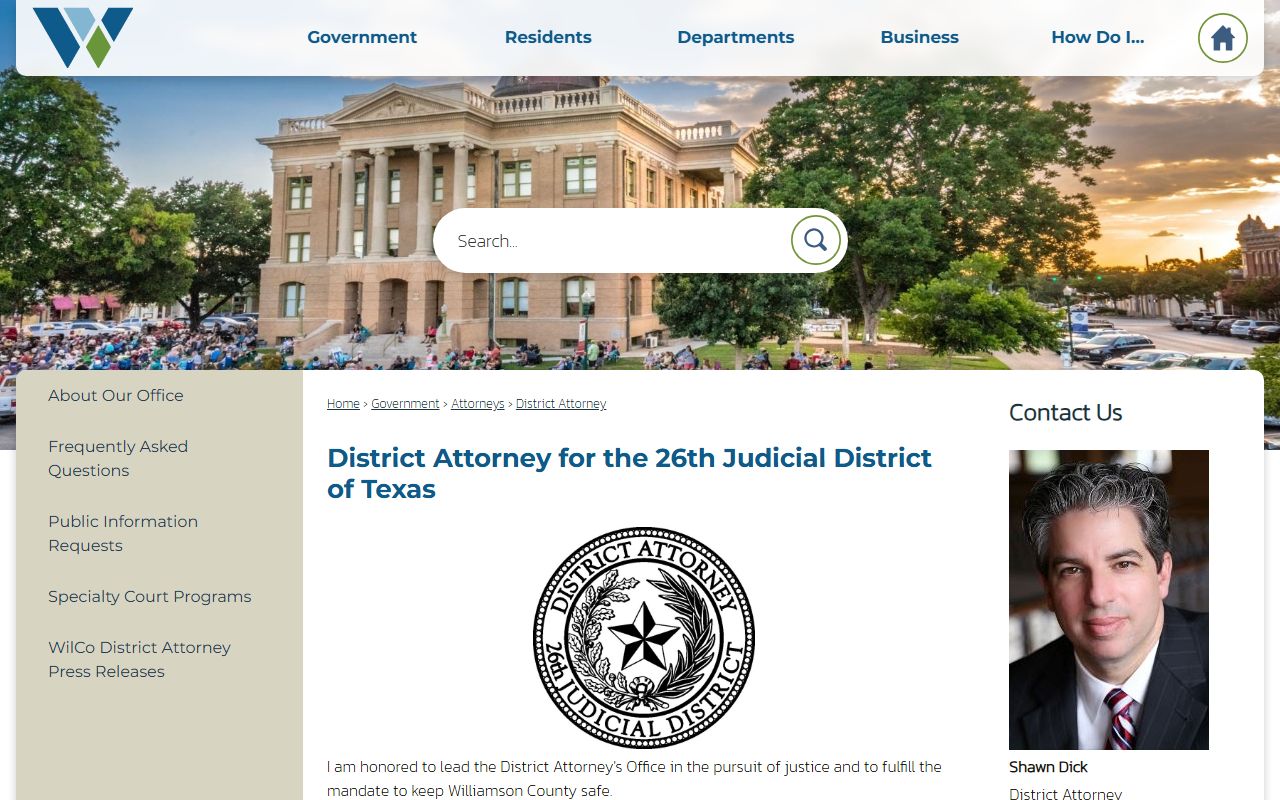
The DA page links public information requests, specialty court programs, and office news.
The office also keeps a dated press-release archive with criminal case results and office updates. You can read recent items in the DA press releases archive.
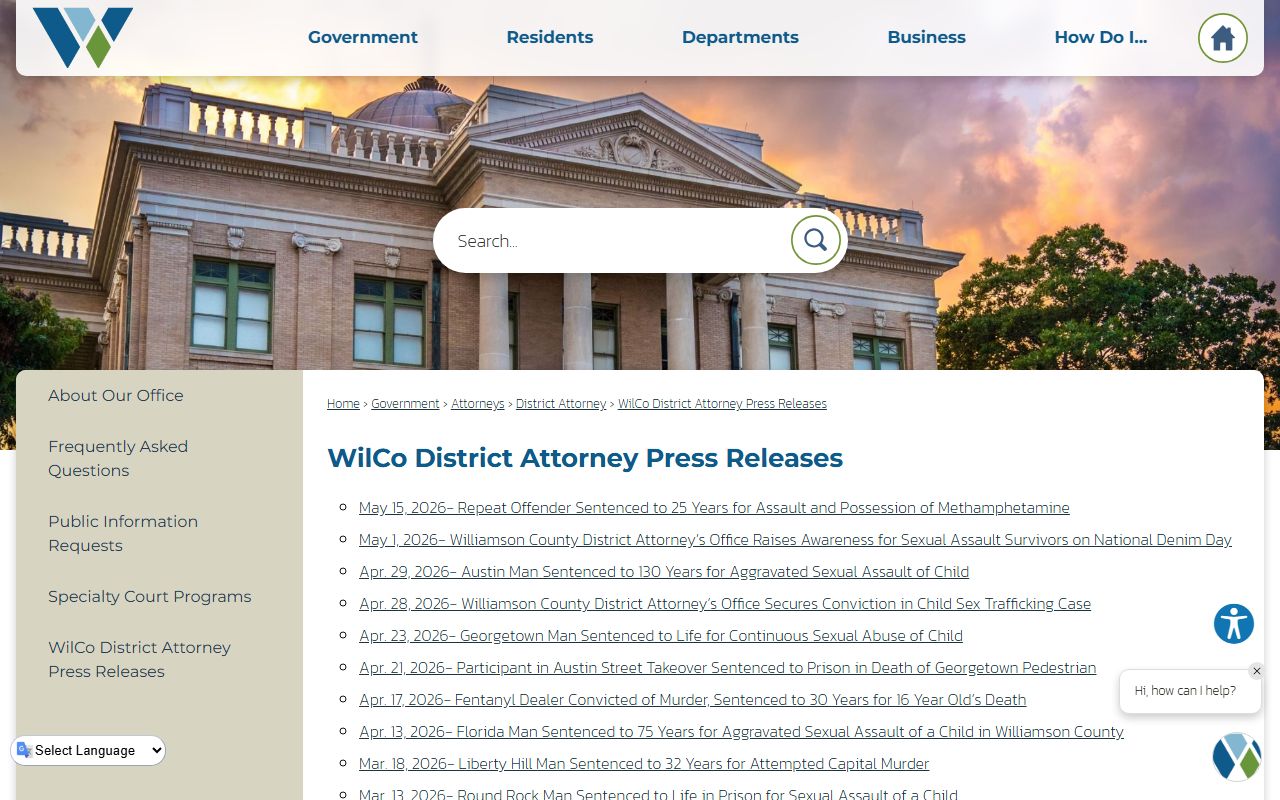
Press releases are public information, though full case files may include material the law lets the office withhold.
Indigent Defense in Williamson County
The county runs an indigent defense process for people who cannot afford a lawyer. A person charged with a jail-punishable misdemeanor or any felony may qualify for court-appointed counsel, but appointment is not automatic. The applicant must complete a sworn application and meet financial requirements under the county's indigent defense plan, which follows the state's Fair Defense Act. You can read about it on the county Indigent Defense page.
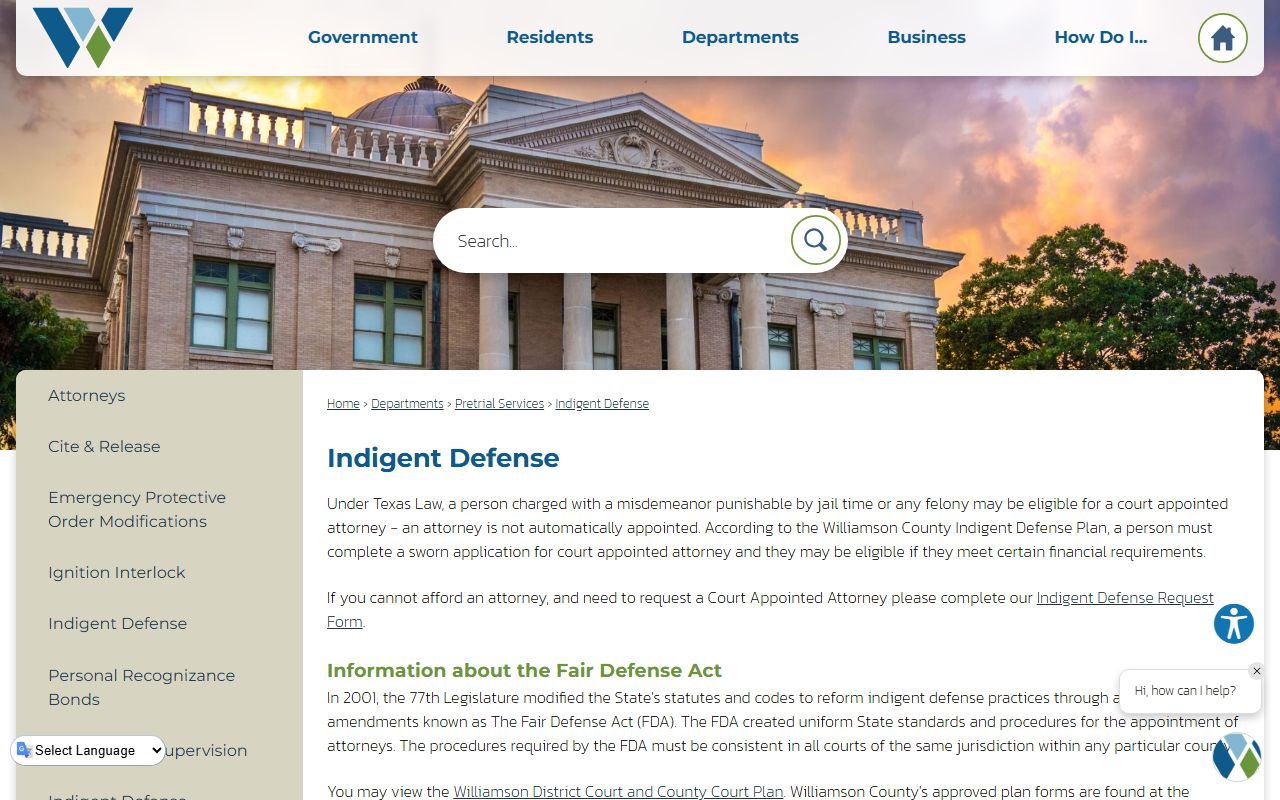
The page explains who qualifies for a court-appointed attorney and how the process works.
Applications run through an online request, and supporting documents may include payroll stubs, tax returns, or proof of public assistance. You can find the request instructions on the county Indigent Defense Request page.
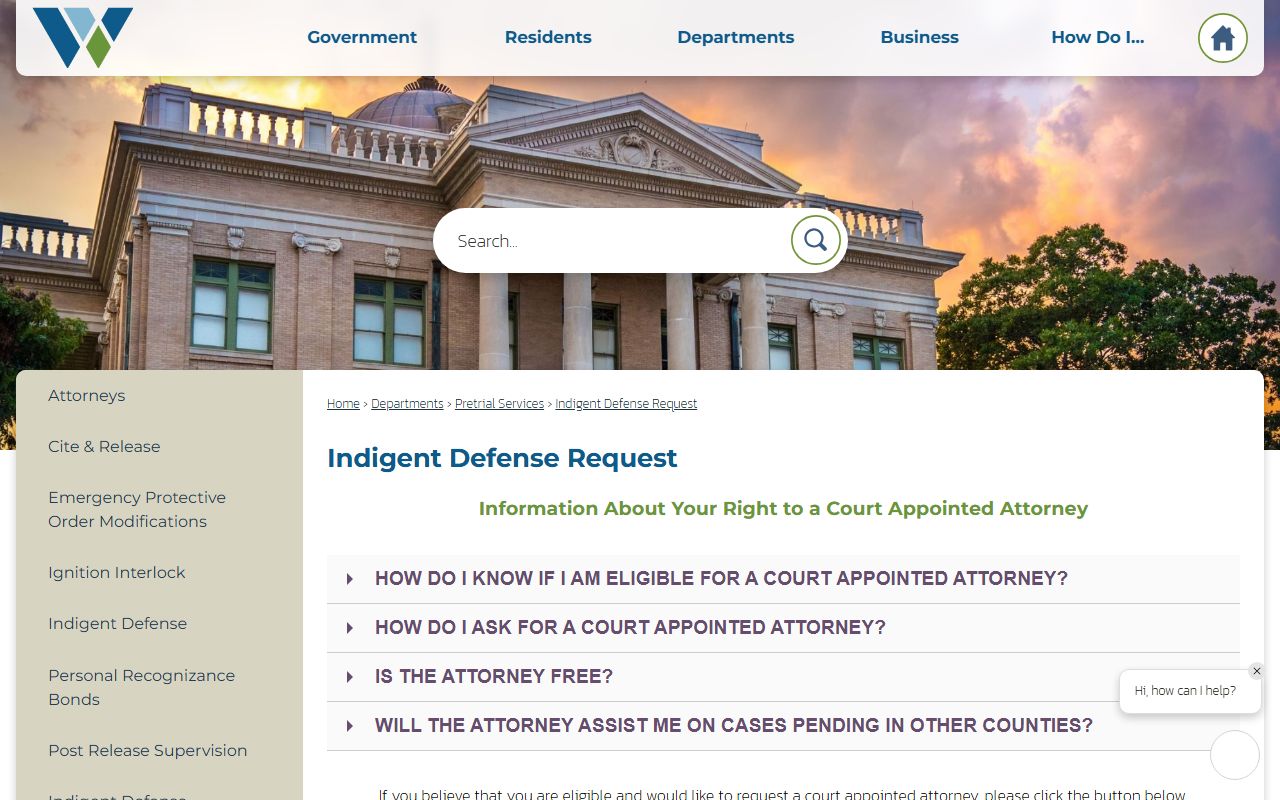
The request page lists the financial documents an applicant should be ready to provide.
Response Timelines
The Act sets a duty to respond promptly. An office must produce public information that is readily available or seek an Attorney General ruling when it wants to withhold records. If a request needs clarification or carries a large cost, the office may ask for more detail or provide an estimate before it proceeds. The clock and the exact steps depend on the records and the exceptions in play, so a complex request takes longer than a simple one. A narrow, well-described request almost always comes back faster, so name the office, the records, and a date range when you can.
Public Records Fees in Williamson County
Under the Act, a county office may charge allowed costs to produce records. Charges can cover copies, and for large requests, labor and programming time under state cost rules. Certified copies from a clerk follow the clerk's copy rate. The table below shows the fee types; confirm exact amounts with the office, since the research here does not fix a per-page figure for every request.
| Item | Amount |
|---|---|
| Per page copy | Allowed cost under state rules (confirm with the office) |
| Labor / programming for large requests | May apply under state cost rules |
| Certified copy (clerk) | $1 per page (standard clerk copy rate) |
| Electronic format | Cost of media plus allowed charges |
Records That Are Exempt
Not everything is public. The Act and other laws shield several categories. Pending law-enforcement and prosecution material may be withheld. Motor vehicle record data like driver license numbers, credit and debit card numbers, and Social Security numbers are protected. Court case records, juvenile records, adoption files, and sealed or expunged records are restricted under their own rules. When an office withholds records, it often must ask the Attorney General to confirm the exception applies. The office should still release any part of a record that is public, even if it has to redact the protected pieces.
Criminal history and registry data have their own limits. The public sex offender registry shows some details but not others, and statewide criminal history runs through the Department of Public Safety. For those topics, see the arrest records page and the sex offender section on the released inmates page.
If Your Request Is Denied
A denial is not always the end. When a county body wants to withhold records, it usually must seek a ruling from the Texas Attorney General, and you can take part in that process. If you believe records were wrongly withheld, you can raise the issue through the Attorney General's open records process. Court-record access disputes are different and may require a motion or a court order rather than an open records appeal. Keep copies of your request and any response, since dates and wording matter if you challenge a denial.